
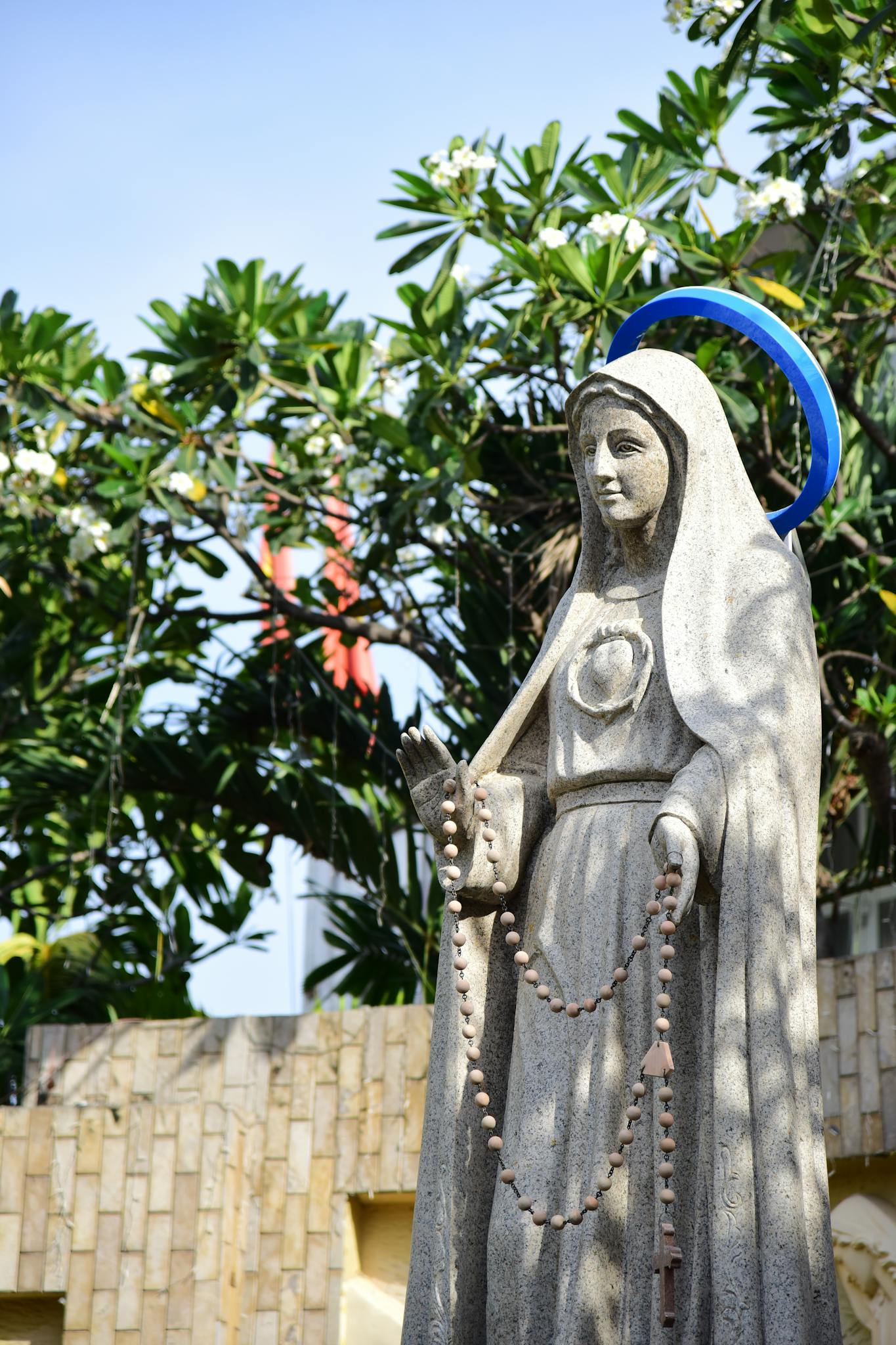
Saint Balderic of Montfaucon
Saints

An early medieval abbot, remembered in later monastic tradition as a son of the Merovingian king Sigebert I, who founded the abbey of Montfaucon in what is now northeastern France.
Saint Balderic of Montfaucon is known chiefly through early medieval monastic tradition rather than well-documented contemporary sources. Later tradition remembers him as a son of the Merovingian king Sigebert I, though such genealogical claims, recorded centuries after his lifetime, should be treated with some caution. What can be said with more confidence is that he embraced monastic life under the Rule of Saint Benedict and founded an abbey at Montfaucon in the Ardennes region of what is now northeastern France, an institution that endured for many centuries as a center of prayer and religious life. He is traditionally said to have died around the year 630 in Reims, though even this date rests on tradition rather than firm record. His veneration, like that of many founders of his era, predates the Church’s later formal canonization process and rests on ancient local and monastic memory.
Quick Facts
- Death traditionally dated to around 630, at Reims, France (exact year uncertain)
- No confirmed birth date survives in the historical record
- Feast Day: kept locally in the Diocese of Reims and among some Benedictine communities; the exact date varies by source
- No formal canonization process applies; veneration rests on ancient local and monastic tradition
- Patron of: the abbey and region of Montfaucon
Who Was Saint Balderic of Montfaucon?
Saint Balderic of Montfaucon is a figure known to us almost entirely through the devotional and monastic tradition of the early medieval Church in what is now northeastern France, rather than through contemporary documentary sources of the kind available for later saints. According to that tradition, he was a member of the Merovingian royal family, remembered as a son of King Sigebert I, though the precise genealogical details recorded in later hagiography should be treated with caution, since accounts of this kind, written centuries after the events they describe, frequently embellished or simplified royal connections to enhance a founder’s prestige. What can be said with somewhat more confidence is that Balderic embraced the monastic life according to the Rule of Saint Benedict and founded an abbey at Montfaucon, in the Ardennes region, which became a center of prayer and religious life that endured for many centuries afterward. He is said to have died around the year 630 in Reims, though even this date rests on later tradition rather than firm contemporary record. His cult remained local, centered on the abbey he founded and the surrounding region, in the pattern typical of many early medieval monastic founders whose historical memory was preserved chiefly by the communities that continued their work.
Historical Setting
Balderic’s life, insofar as it can be reconstructed, belongs to the Merovingian era of early medieval Gaul, a period in which the kingdoms carved out by the descendants of Clovis were repeatedly divided, reunited, and fought over by rival branches of the royal family, even as the Church steadily expanded its network of monasteries and dioceses across the former Roman territories of Gaul. Royal and aristocratic patronage of new monastic foundations was common in this period, and it was not unusual for members of noble or even royal families to found or enter religious houses, both as a genuine expression of piety and as a means of securing prayer and patronage for their kin. The abbey Balderic is said to have founded at Montfaucon fits this broader pattern of Merovingian-era monastic expansion, in which such houses served as centers of learning, prayer, and local stability during a politically turbulent age. Given the scarcity of reliable contemporary sources for this period generally, much of what is said about Balderic’s specific royal connections reflects later monastic tradition more than independently verifiable history.
Why the Church Venerates Saint Balderic of Montfaucon
The Church and, more specifically, the monastic and local tradition of the Ardennes region has venerated Balderic as the founder of a religious house that shaped the spiritual life of Montfaucon and its surrounding area for many generations. As is typical of early medieval monastic founders, his veneration rests less on any single dramatic event than on the durable, ongoing legacy of the community he established, one that continued the pattern of prayer, hospitality, and stability he set in motion long after his own death. His association with the Merovingian royal house, however historically uncertain in its details, also placed him within a recognizable tradition of royal figures who set aside worldly position for the ascetic life, a pattern the medieval Church particularly prized as a witness against attachment to power and wealth.
Canonization and Feast Day
Balderic’s veneration, like that of many early medieval saints, predates the developed juridical process of canonization that the Church later adopted, and he was never subject to a formal modern cause. His sainthood rests instead on ancient and continuous local recognition centered on the abbey of Montfaucon and the wider Diocese of Reims. The precise date on which his feast has traditionally been kept varies by source and locality, and readers seeking to observe it should consult the calendar of the diocese or Benedictine community that maintains his cult.
What Catholics Can Learn Today
Balderic’s story, thin as the historical record is, still offers something for Catholics today: a reminder that choosing to build something lasting, in his case a house of prayer that would outlive him by centuries, matters more than the prominence of the family or position one leaves behind to do it. Whatever the truth of his royal ancestry, what endured was not a title but a community of monks devoted to work and worship long after any court memory of him had faded. His example invites reflection on the difference between the legacy that depends on status and the legacy that depends on what one actually builds and leaves for others to carry forward.
A Prayer to Saint Balderic of Montfaucon
Saint Balderic of Montfaucon, you set aside whatever worldly standing was yours to build a home of prayer that outlasted every claim of birth or title. Teach me to value what I build for others over what I might inherit or be given. Though little is remembered of your own words, your abbey stood as your lasting prayer; help me to leave behind something of lasting good, however modest, in the place where God has put me. Pray for monks and religious communities today who continue the quiet work of prayer and hospitality your own foundation began so long ago. Amen.
Sources
- the Catholic Encyclopedia (New Advent)
- the Roman Martyrology
- Benedictine monastic historical records on the abbey of Montfaucon
- Encyclopaedia Britannica