
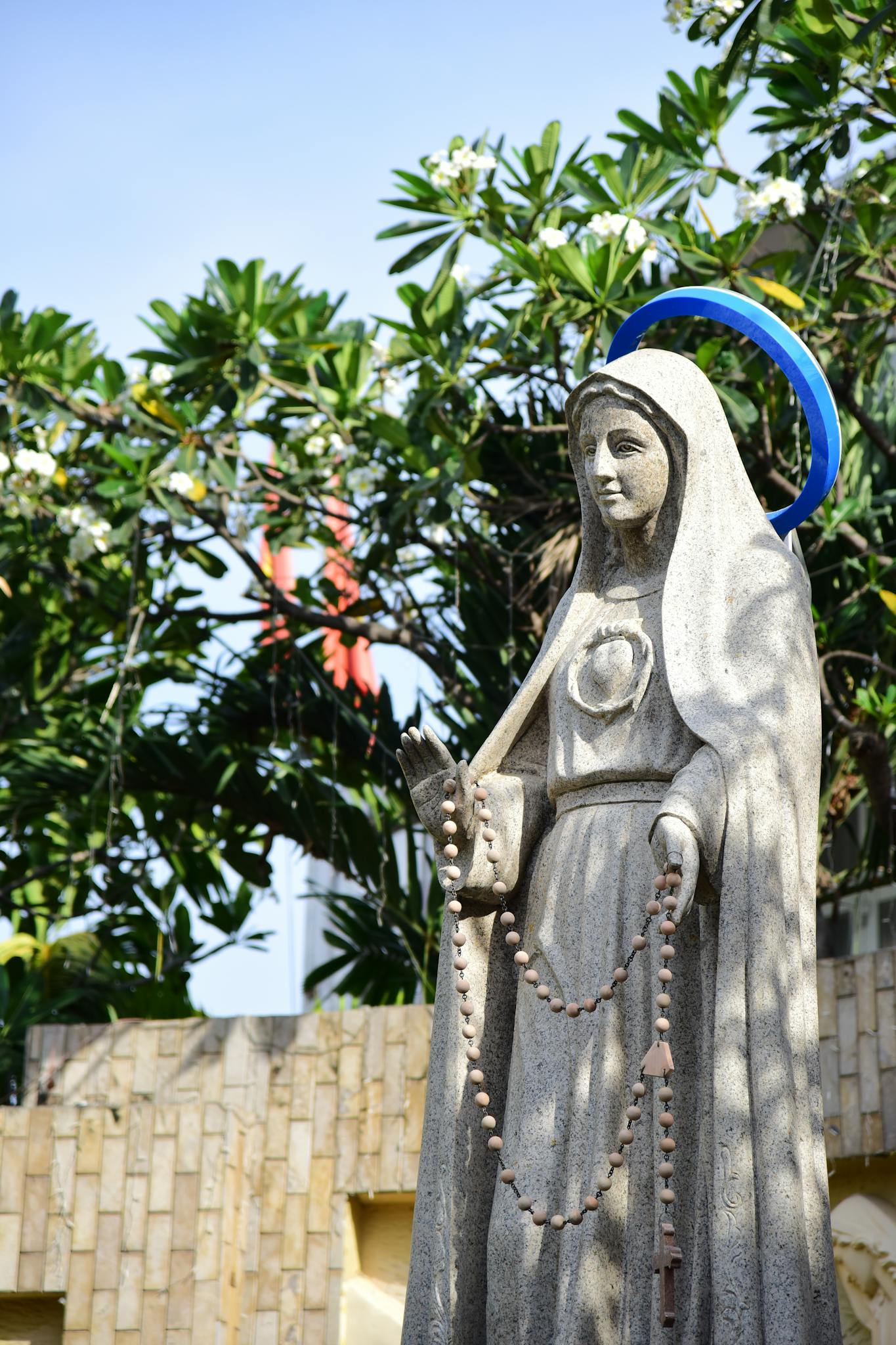
Saint Aprus of Sens
Saints
A little-documented priest and hermit of the Sens region in France, traditionally dated to the mid-seventh century and known chiefly through later local devotion.
Saint Aprus of Sens is a priest and hermit associated with the region of Sens in France, whose life is known only in outline and largely through tradition rather than contemporary documentation. He is remembered as a priest who lived a solitary, ascetic life, and the surviving record places his death around the year 650, though even that date is uncertain and is often given with a question mark in older reference works. No detailed biography, reliable birthplace, or verified specific deeds have survived from his own time; what remains is a modest local memory kept alive across centuries by the communities of the Sens region. In 1903, the Holy See confirmed his long-standing local veneration through an equipollent canonization, the process used for saints whose cultus long predates the Church’s later formal procedures, rather than issuing a new canonization based on fresh evidence.

Quick Facts
- Born: date and place unknown, France
- Died: traditionally around the year 650, exact date uncertain
- Feast Day: not firmly attested in the sources consulted for this page; kept locally in the Sens region
- Canonized: 1903 (equipollent canonization, confirming an ancient local cultus)
- Patron of: no recorded universal patronage
Who Was Saint Aprus of Sens?
Saint Aprus of Sens is remembered simply as a priest who also lived as a hermit in the area around Sens, in what is now north-central France, at some point in the early medieval period. Almost nothing specific survives about his family, his early life, or the particular events of his ministry; the tradition that has come down to us identifies him primarily by his vocation, priest and hermit, and by his general association with the Sens region rather than by any detailed narrative. Later sources place his death around the year 650, but even this date carries a question mark in the reference works that record it, a sign that it rests on inference or later tradition rather than a securely dated contemporary source. What can honestly be said is that a local devotion to a priest-hermit by this name persisted in the Sens area across the centuries, strong enough that it was still recognized and formally confirmed by the Holy See in the early twentieth century, even though the biographical record behind that devotion had, by then, long since thinned to little more than a name and a vocation.
Historical Setting
If the traditional dating is accurate, Aprus lived in the seventh century, within Merovingian Gaul, an era when Christianity was still being consolidated across the French countryside through the efforts of monasteries, itinerant hermits, and local bishops, and when many rural saints’ cults began as intensely local memories tied to a single church, spring, or hermitage rather than to any wider fame. Sens itself was an important ecclesiastical center in this period, and the surrounding countryside supported a number of hermits and small monastic foundations, the kind of setting in which a solitary priest’s memory could be preserved by nearby communities long after his death, even without any wider written record being kept.
Why the Church Venerates Saint Aprus of Sens
Aprus is venerated not because of a well-documented set of heroic deeds but because a Christian community sustained, generation after generation, a genuine memory of a priest whose solitary and prayerful life it judged worth honoring. This kind of modest, locally rooted cultus represents a significant category of sainthood in the Church’s history: holiness recognized first by ordinary believers close to the saint’s own place and time, long before any formal process existed to examine or confirm it, and preserved by fidelity rather than by fame.
Canonization and Feast Day
No formal canonization process, of the kind developed in later centuries, existed for saints of Aprus’s era. What the Holy See granted in 1903 was an equipollent canonization, a recognition extending the honors of sainthood to a person already venerated as a saint by immemorial local custom, without a new inquiry into miracles or a fresh cause. This page does not assign a specific feast day with confidence, since the sources consulted here do not attest one clearly; readers seeking the day currently kept in the Sens region should consult the diocesan calendar directly.
What Catholics Can Learn Today
Aprus’s story is, in a sense, a lesson in the limits of the historical record itself. Very little can be said about him with confidence, and an honest page about his life must resist the temptation to invent the specifics that are missing. That very honesty carries its own value: it reminds readers that sanctity does not depend on documentation, and that countless ordinary believers throughout history have lived and died in obscurity while still, in the judgment of their own communities and ultimately of God, living genuinely holy lives worth remembering.
A Prayer to Saint Aprus of Sens
Saint Aprus of Sens, hidden priest and hermit whose very details have faded from the written record, we entrust to you all whose faithful lives pass unnoticed by history. Obtain for us contentment in hidden service and prayer offered without recognition. Teach us that a life spent quietly with God is never wasted, even when no one thinks to write it down. Pray for hermits, for the forgotten faithful, and for all who serve God in silence. Amen.
Sources
- the Roman Martyrology
- Butler’s Lives of the Saints
- the historical records of the Diocese of Sens-Auxerre
- Acta Sanctorum (Bollandists)