
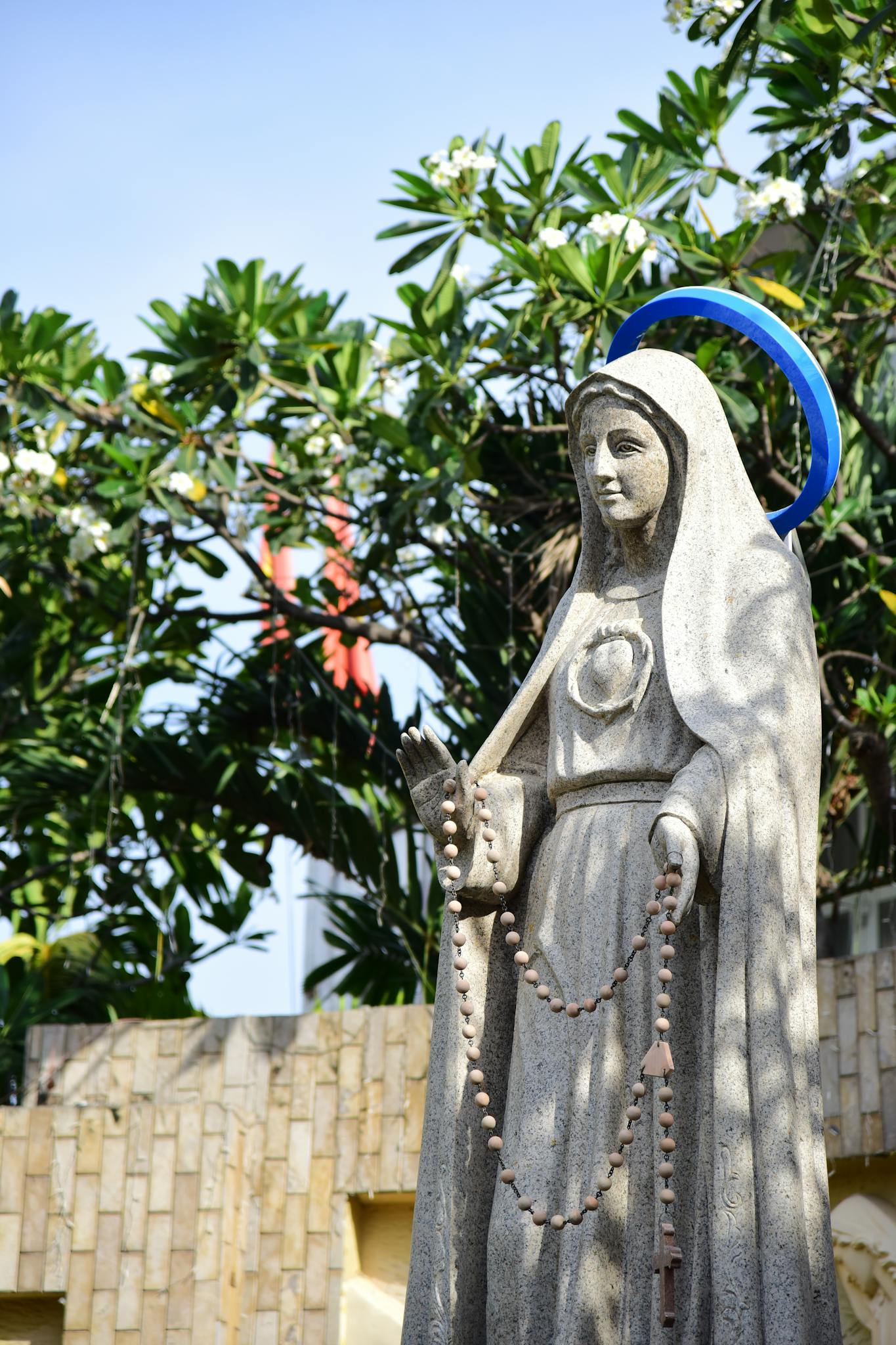
Saint Anthony Mary Claret
Saints
A Spanish archbishop, founder of the Claretian Missionaries, tireless preacher and confessor to a queen, who died in exile in France in 1870.
Saint Anthony Mary Claret (Antonio María Claret y Clará) was a Spanish priest, archbishop, and founder whose energetic preaching and writing reshaped Catholic evangelization in nineteenth-century Spain and Cuba. Born in Sallent, Catalonia, in 1807, he was ordained a diocesan priest before becoming a sought-after popular missionary preacher throughout Catalonia. In 1849 he founded the Missionary Sons of the Immaculate Heart of Mary, known as the Claretians, and the following year was appointed Archbishop of Santiago de Cuba, where he undertook sweeping pastoral and social reforms despite facing violent opposition, including an assassination attempt. Recalled to Spain in 1857 to serve as confessor to Queen Isabella II, he continued preaching and writing extensively, founding a religious congregation for women as well. Political upheaval forced him into exile in France in 1868, where he died at the Cistercian abbey of Fontfroide in 1870. He was canonized in 1950 by Pope Pius XII.

Quick Facts
- Born: 23 December 1807, Sallent, Catalonia, Spain
- Died: 24 October 1870, Fontfroide Abbey, near Narbonne, France, aged 62
- Feast Day: 24 October
- Beatified: 25 February 1934, by Pope Pius XI
- Canonized: 7 May 1950, by Pope Pius XII
- Patron of: weavers and textile workers, and of the Catholic press; invoked by the Claretian family he founded
Who Was Saint Anthony Mary Claret?
Saint Anthony Mary Claret was born in 1807 in Sallent, a Catalan textile town, into a weaving family, and worked for a time in the textile trade himself before discerning a call to the priesthood. Ordained in 1835, he initially considered joining a religious order for foreign missions but was directed instead toward home mission preaching, and for over a decade he traveled throughout Catalonia delivering parish missions and retreats that drew immense crowds, earning him a reputation as one of the most effective popular preachers in Spain. Alongside this preaching ministry he wrote and distributed an enormous body of devotional and catechetical literature, convinced that the printed word could extend evangelization far beyond what any single missionary could reach in person. In 1849 he founded the Missionary Sons of the Immaculate Heart of Mary, a congregation of priests dedicated to popular missions, publishing, and education, known today as the Claretians. The following year he was named Archbishop of Santiago de Cuba, a diocese in serious need of reform, where he undertook an ambitious program of pastoral visitation, clergy formation, and social improvement, including efforts on behalf of the enslaved and the rural poor, work that provoked fierce resistance and at least one attempt on his life. Recalled to Spain in 1857 to become confessor to Queen Isabella II, Claret used his position at court not for personal advantage but to continue founding institutions, writing, and preaching, including the establishment of a religious congregation for women, the Religious of Mary Immaculate. When revolution forced the queen from the throne in 1868, Claret followed her into exile, eventually withdrawing to the Cistercian monastery of Fontfroide in southern France, where he died in 1870.
Historical Setting
Claret’s ministry unfolded during one of the most turbulent centuries in Spanish religious and political history, marked by repeated conflict between liberal anticlerical movements and the Church, periodic confiscation of Church property, and instability in the Spanish monarchy itself. His years as Archbishop of Santiago de Cuba placed him within the complex colonial society of nineteenth-century Cuba, still dependent on slave labor, where his reforming efforts touched sensitive social and economic interests and made him a target of hostility from some quarters of colonial society. His later years as royal confessor situated him at the uneasy intersection of Church and Spanish court politics in the years leading up to the Glorious Revolution of 1868, which deposed Isabella II and sent both queen and archbishop into French exile, where Claret spent his final two years.
Why the Church Venerates Saint Anthony Mary Claret
The Church venerates Anthony Mary Claret as one of the most energetic and far-sighted evangelizers of the modern era, a man who combined old forms of popular preaching with new methods of mass publishing, and who translated his zeal into lasting institutions rather than leaving it as personal charisma alone. His willingness to press for social and pastoral reform in colonial Cuba, despite violent opposition, and his refusal to use his influence at the royal court for personal gain, reflect a consistency between his private convictions and his public conduct that the Church has held up as a model of integrity for clergy operating amid political power and controversy.
Canonization and Feast Day
Anthony Mary Claret was beatified on 25 February 1934 by Pope Pius XI and canonized on 7 May 1950 by Pope Pius XII. His cause followed the standard process for a confessor of the faith, requiring the Church’s examination of his heroic virtue and the verification of miracles attributed to his intercession after death, alongside the extensive documentary record left by his own voluminous writings and the institutions he founded. His feast is kept on 24 October, the anniversary of his death.
What Catholics Can Learn Today
Claret’s life demonstrates that zeal for evangelization can and should adapt to the tools and needs of its age, whether that meant traveling tirelessly to preach parish missions or embracing the printing press as a new instrument of the Gospel. His steady integrity amid the pressures of court life and colonial politics also offers a model for anyone who finds themselves with influence or proximity to power: that such positions are opportunities for service and reform rather than personal advancement. For Catholics today, his example encourages a combination of missionary creativity and unwavering personal integrity, wherever one’s particular circumstances happen to place them.
A Prayer to Saint Anthony Mary Claret
Saint Anthony Mary Claret, tireless preacher and founder, you brought the Gospel to crowded parish squares and to the halls of a royal court with the same integrity and zeal. Teach us to use whatever gifts and opportunities we are given, however humble or however prominent, entirely in service of others rather than ourselves. Pray for preachers, writers, and all who labor to spread the Gospel through the means of their own age; pray for those who serve near power, that they may remain humble and incorruptible as you did. Help us to bear exile, opposition, and loss, as you did, without losing our peace or our purpose. Amen.
Sources
- Vatican.va, canonization records of Pope Pius XII (1950)
- the Claretian Missionaries (Missionary Sons of the Immaculate Heart of Mary), historical records of their founder
- the Catholic Encyclopedia (New Advent), entries on Saint Anthony Mary Claret
- EWTN, biographical resources on Saint Anthony Mary Claret