Saint Antoine-Marie-Nicolas Daveluy
Saints
A French missionary bishop of the Paris Foreign Missions Society who served as Vicar Apostolic of Korea and was martyred in 1866 during the great persecution of Korean Catholics.
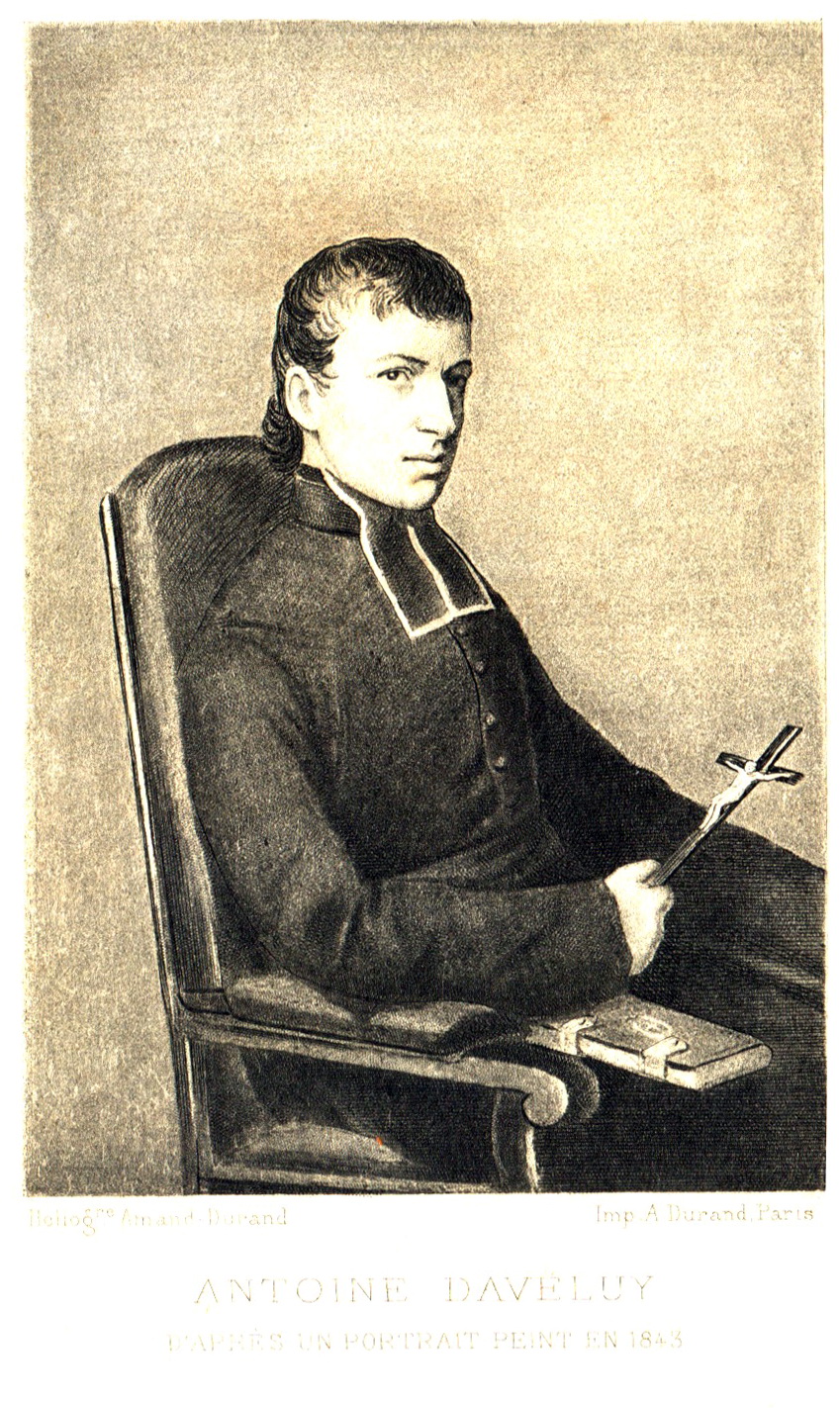
Saint Antoine-Marie-Nicolas Daveluy was a French missionary bishop who devoted his life to the Catholic Church in Korea during one of its most dangerous periods. Born in Amiens in 1818, he joined the Paris Foreign Missions Society and arrived in Korea in 1845, a country then closed to foreign religion under penalty of death. He worked for over two decades translating catechetical and devotional texts into Korean, training a small underground clergy, and eventually became coadjutor and then vicar apostolic of Korea. When the regency of the Daewongun launched a sweeping persecution of Christians in 1866, Daveluy was arrested along with fellow missionaries and Korean converts. He was executed by beheading near Boryeong on 30 March 1866. He is venerated among the 103 Korean Martyrs, canonized in Seoul in 1984 by Pope John Paul II.
Quick Facts
- Born: 16 March 1818, Amiens, Somme, France
- Died: 30 March 1866, at Galmaemot, near Boryeong, South Korea, aged 48
- Feast Day: 20 September, common feast of the Korean Martyrs (Saint Andrew Kim Taegon and Companions)
- Beatified: 6 October 1968, by Pope Paul VI
- Canonized: 6 May 1984, by Pope John Paul II, in Seoul
- Venerated as: Vicar Apostolic of Korea and bishop-martyr, among the 103 Korean Martyrs
Who Was Saint Antoine-Marie-Nicolas Daveluy?
Saint Antoine-Marie-Nicolas Daveluy was born in Amiens, France, in 1818 and, after studying for the priesthood, joined the Paris Foreign Missions Society (Missions Étrangères de Paris), an institute dedicated to sending secular clergy to found and sustain the Catholic Church in Asia. In 1845 he made the difficult and dangerous journey into Korea, a kingdom that at the time forbade the practice of Christianity and had already executed a number of Korean Catholics and at least one earlier missionary priest. For more than twenty years Daveluy worked largely in hiding, moving between clandestine Catholic communities, training Korean catechists and seminarians, and undertaking substantial work translating prayers, catechisms, and devotional literature into the Korean language to help a persecuted Church sustain itself without regular access to priests. He was named titular bishop and coadjutor to the vicar apostolic of Korea in 1857 and succeeded to the office of vicar apostolic in early 1866, only weeks before a renewed and especially violent persecution, ordered by the regent Heungseon Daewongun, swept through the country. Daveluy was among the first missionaries captured; after imprisonment and interrogation he was executed near Boryeong on 30 March 1866, one of thousands of Korean Catholics and several foreign missionaries killed that year.
Historical Setting
Daveluy’s ministry took place within the Joseon dynasty’s long and often brutal suppression of Catholicism, which the Korean court associated with foreign influence and social subversion. Catholicism had entered Korea in the late eighteenth century not through missionaries but through Korean scholars who encountered Christian texts brought from China, making the early Korean Church unusually indigenous in its founding. Waves of persecution followed through the early nineteenth century, and by the time Daveluy arrived in 1845, the faith survived largely underground, sustained by lay catechists and a handful of secretly present foreign priests. The persecution of 1866, the most severe of the century, was set off partly by the regent’s fear of foreign incursion following Western pressure on East Asia and partly by internal court politics; it claimed the lives of most of the French missionary bishops and priests then in Korea, along with several thousand Korean lay Catholics, and effectively decimated the leadership of the Korean Church for a generation.
Why the Church Venerates Saint Antoine-Marie-Nicolas Daveluy
The Church venerates Daveluy both as a bishop who gave his life for his flock and as a scholar-missionary whose translation work helped a persecuted Church survive without regular sacramental and catechetical access to clergy. Unlike some martyrs remembered chiefly for the moment of their death, Daveluy is honored for two decades of patient, largely invisible labor — learning Korean, training native leadership, and putting essential texts into the hands of ordinary believers — that proved as important to the Korean Church’s endurance as his final witness of blood. His martyrdom, alongside so many Korean laypeople, also reflects the Church’s recognition that the Korean Catholic community’s survival through repeated persecutions was a genuinely shared achievement of missionary bishops and native believers together.
Canonization and Feast Day
Antoine-Marie-Nicolas Daveluy was beatified on 6 October 1968 by Pope Paul VI, part of a group of Korean martyrs recognized in the twentieth century, and was canonized on 6 May 1984 by Pope John Paul II during a historic papal visit to Seoul, where the pope canonized 103 Korean Martyrs together — the first canonization ceremony held outside Rome in the modern era. As a recognized martyr, his cause proceeded on the grounds of death borne for the faith rather than through the verification of a miracle. The 103 Korean Martyrs, including Daveluy, share a common feast day of 20 September, observed together with Saint Andrew Kim Taegon, Korea’s first native-born priest and martyr.
What Catholics Can Learn Today
Daveluy’s life illustrates a form of missionary faithfulness that has little to do with visibility or immediate success: two decades spent mostly hidden, doing patient linguistic and pastoral labor whose fruit he would not live to see fully realized. For Catholics today, his example challenges the assumption that meaningful service must be recognized or dramatic to matter. His willingness to remain in Korea despite the constant danger, and to keep training local leaders rather than simply ministering himself, also models a kind of humility about mission: building something that could outlast him, in a Church that was never meant to depend permanently on foreign missionaries.
A Prayer to Saint Antoine-Marie-Nicolas Daveluy
Saint Antoine-Marie-Nicolas Daveluy, faithful shepherd who crossed the sea for a people you came to love as your own, you labored hidden for twenty years so that the Korean Church might have the words of the faith in its own tongue, and you gave your life when the persecution came at last. Teach us to serve without needing to be seen, and to build up others rather than seeking recognition for ourselves. Pray for the Church in Korea, for missionaries who labor today in places closed to the Gospel, and for all who must practice their faith in secret and in fear. Obtain for us your patience and your courage, that we too may be found faithful when the moment of testing comes. Amen.
Sources
- Vatican.va, canonization records and homily of Pope John Paul II (Seoul, 1984)
- the Catholic Encyclopedia (New Advent), entries on the Church in Korea and the Paris Foreign Missions Society
- the Roman Martyrology
- EWTN, biographical resources on the Korean Martyrs