
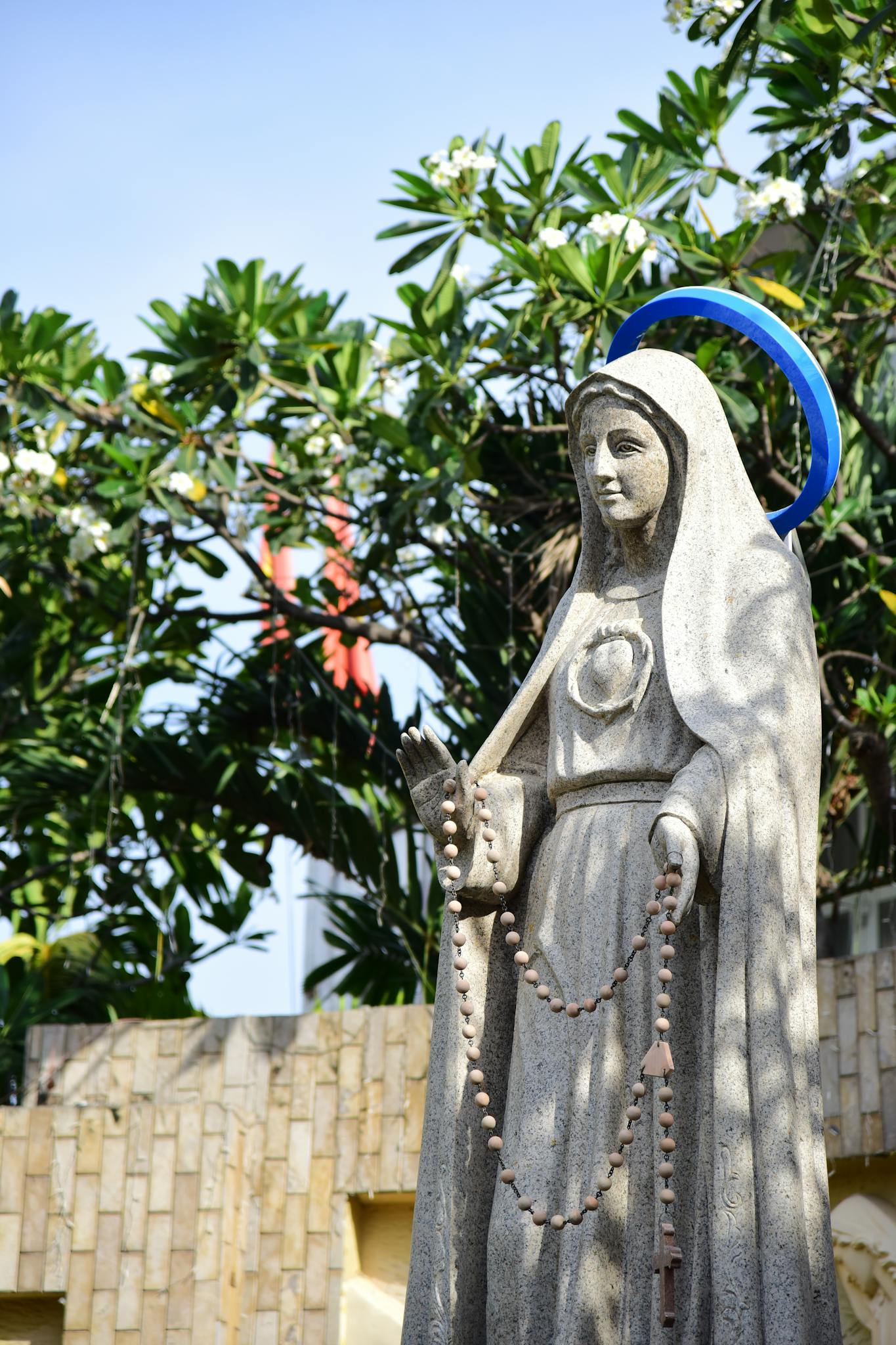
Saint Anrê Trần Văn Trông
Saints
A young Vietnamese Catholic soldier who chose execution over trampling the cross when his commanders discovered his faith in 1835.
Saint Anrê Trần Văn Trông was a Vietnamese Catholic layman, born around 1814 in Kim Long, in Thừa Thiên province near the imperial capital of Huế, who served within the territory of the vicariate of Cochinchina at a time when Catholicism was subject to intermittent but severe persecution under the Nguyễn dynasty. Tradition holds that he served in the imperial army, and that his Catholic faith came to the attention of his superiors, who pressed him, as officials frequently did with soldiers and officials suspected of Christianity, to demonstrate loyalty to the state by trampling on a crucifix. He refused to renounce his faith by this or any other means and was subsequently arrested, imprisoned, and executed at An Hòa market in Huế on November 28, 1835, at around twenty-one years old. He is remembered today as one of the 117 Vietnamese Martyrs, honored in particular as an example of youthful lay fidelity within the ranks of imperial service itself.
Quick Facts
- Born: traditionally dated to around 1814, in Kim Long, Thừa Thiên, Vietnam
- Died: November 28, 1835 (around age 21), at An Hòa, Thừa Thiên (Huế), Vietnam
- Feast Day: November 24, with Saint Andrew Dũng-Lạc and Companions
- Beatified: May 27, 1900, by Pope Leo XIII
- Canonized: June 19, 1988, by Pope John Paul II
- Patron of: young Catholic laymen and soldiers
Who Was Saint Anrê Trần Văn Trông?
Andrew Trần Văn Trông was born around 1814 in Kim Long, near the Nguyễn dynasty’s imperial capital of Huế, within the missionary territory then known as Cochinchina. Details of his early life are sparse in commonly available sources, but the tradition of his cause holds that he was serving, likely as a young soldier or minor official, within structures connected to the imperial court or military at the time his Catholic faith became known to his superiors. Once identified as a Christian, he would have faced the same demand made of countless other Vietnamese Catholics under the anti-Christian edicts of Emperor Minh Mạng: to prove his renunciation of the faith by physically trampling on a crucifix, an act that was treated by the imperial authorities as definitive proof of apostasy and by Vietnamese Catholics as an unthinkable betrayal of Christ. Andrew Trần Văn Trông refused. He was arrested, held in prison for a period during which he was likely subjected to repeated pressure and possibly torture to force compliance, and ultimately executed at An Hòa market near Huế on November 28, 1835, at around twenty-one years of age, one among many young Vietnamese laypeople who died in the same decade for the same refusal.
Historical Setting
The persecution under Emperor Minh Mạng, which intensified through the 1830s, did not spare those already serving within Vietnamese state institutions; soldiers, minor officials, and other government servants who were discovered to be Catholic faced the same choice offered to villagers and clergy — trample the cross and live, or refuse and risk death. This made positions of state service, which might elsewhere have offered some protection, into a particular point of exposure for Vietnamese Catholics like Andrew Trần Văn Trông, whose faith placed him in direct and personal conflict with the authority he otherwise served. Huế and the surrounding central Vietnamese provinces saw a number of executions of Catholics during this period as the imperial court sought to demonstrate the thoroughness of its suppression of the foreign religion.
Why the Church Venerates Saint Anrê Trần Văn Trông
The Church venerates Andrew Trần Văn Trông as a young layman who, placed by circumstance within the very apparatus of the state that was persecuting Christians, refused the specific demanded act — trampling the crucifix — that would have secured both his safety and his continued position. His martyrdom is honored as a particularly direct instance of the choice at the heart of the Vietnamese persecutions: a single physical gesture that meant the difference between life and death, which he would not perform.
Canonization and Feast Day
Andrew Trần Văn Trông was beatified by Pope Leo XIII on May 27, 1900, and canonized on June 19, 1988, by Pope John Paul II together with 116 fellow Vietnamese martyrs as part of the group known as Saint Andrew Dũng-Lạc and Companions. Their shared feast day, November 24, commemorates martyrs of the Vietnamese Church across roughly two centuries of intermittent persecution.
What Catholics Can Learn Today
Andrew Trần Văn Trông’s youth, and the fact that his martyrdom turned on a single demanded gesture rather than a prolonged public confrontation, is a reminder that the test of faith can sometimes come down to one specific, concrete refusal rather than a grand or dramatic stand. His example invites Catholics today to consider what their own equivalent of trampling the cross might be — the small, specific compromises that could be asked of them — and to take seriously the conviction that some acts, however minor they might appear to an outside observer, are simply not available to a believer to perform.
A Prayer to Saint Anrê Trần Văn Trông
Saint Anrê Trần Văn Trông, young soldier who would not let your foot betray what your heart believed, pray for young Catholics today who face pressure to compromise their faith for the sake of position or safety. Give us your clarity in the moment of decision, that we may recognize which small acts carry the whole weight of our loyalty to Christ. Intercede for all who serve within systems hostile to their faith, that they may find in you a companion who understood their exact temptation and did not yield to it. Amen.
Sources
- Vatican.va, canonization homily of Pope John Paul II, June 19, 1988
- the Roman Martyrology
- the Catholic Encyclopedia (New Advent), entries on the Church in Vietnam
- EWTN