
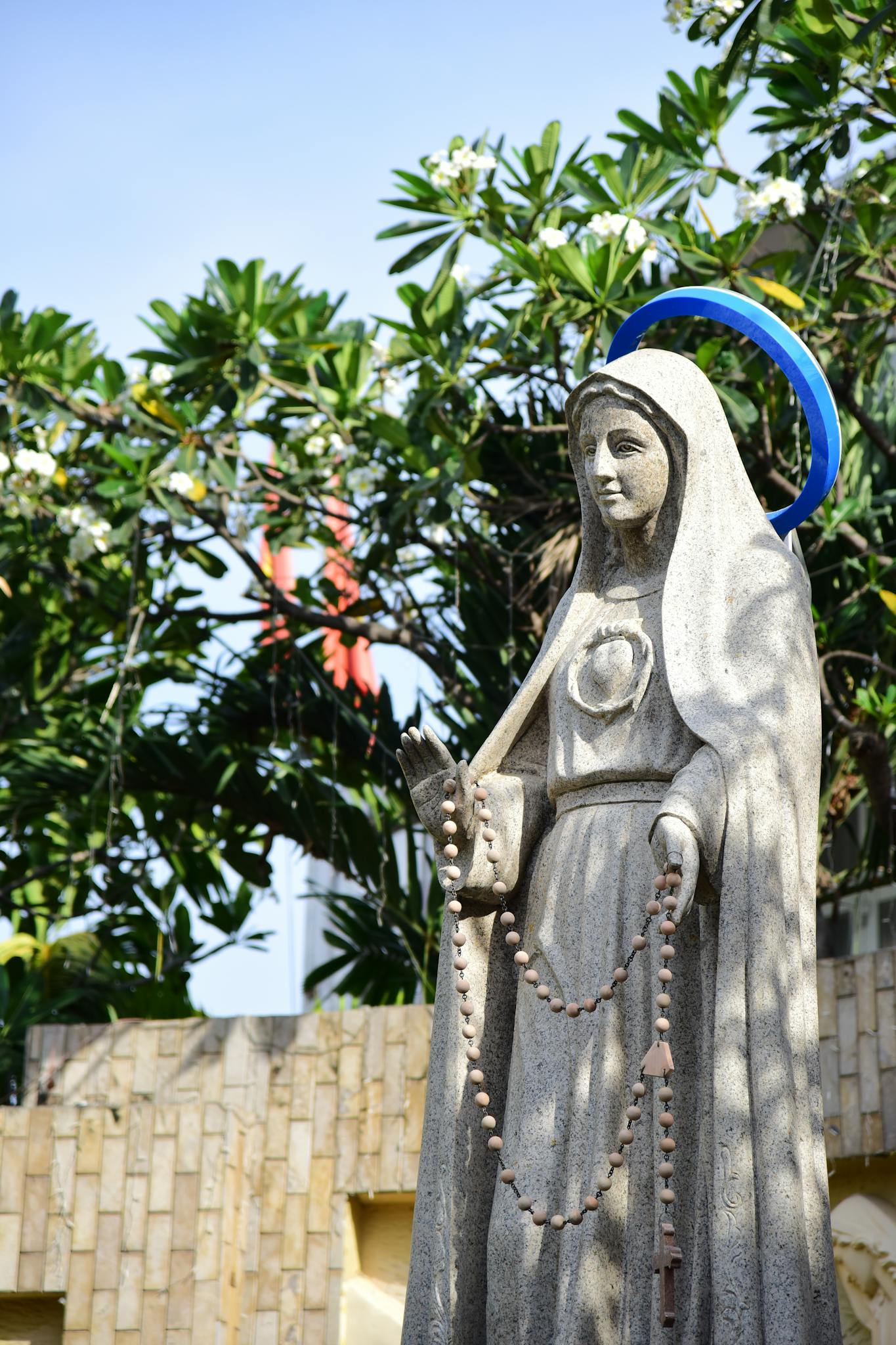
Saint Anna Wang
Saints
A teenage Catholic girl from Hebei province who met death with striking composure during the anti-Christian violence of the Boxer Uprising in 1900.
Saint Anna Wang was a young Catholic girl from the village of Machiazhuang in Weixian County, Hebei province, China, born around 1886 and thus only about thirteen or fourteen years old at the time of her death. She belonged to the Apostolic Vicariate of Southeastern Chi-Li, a heavily Catholic missionary district that suffered severe violence during the Boxer Uprising of 1900. On July 22, 1900, Boxer attackers reached her village, and Anna Wang, along with other Catholics of the community, was killed for refusing to renounce her Christian faith. Later accounts handed down within her local Catholic community describe her meeting death with a calm and courage remarkable for someone so young, though as with many details of the Boxer-era martyrdoms, the precise words and circumstances attributed to her by later devotion should be read as pious tradition rather than verified historical record. She is remembered among the youngest of the 120 Martyrs of China canonized together in the year 2000.

Quick Facts
- Born: traditionally dated to around 1886 (exact year uncertain), in Machiazhuang, Weixian County, Hebei, China
- Died: July 22, 1900 (around age 13-14), in Machiazhuang, Weixian, Hebei, China
- Feast Day: July 9, with Saint Augustine Zhao Rong and Companions
- Beatified: April 17, 1955, by Pope Pius XII
- Canonized: October 1, 2000, by Pope John Paul II
- Patron of: young people and Catholic children facing persecution
Who Was Saint Anna Wang?
Anna Wang lived her short life in Machiazhuang, a village in Weixian County within the Apostolic Vicariate of Southeastern Chi-Li, one of the mission territories in Hebei province where generations of Catholic families had grown up under the pastoral care of French and other European missionary congregations. Almost nothing survives of her personal history beyond her age, her village, and the date of her death, which is typical for the very young among the martyrs of this period — children rarely left behind letters, testimonies, or extended records of the kind sometimes available for missionary priests or adult converts. What has been preserved, largely through the oral memory of her local Catholic community and later hagiographical accounts, is the tradition that she met her death with unusual serenity for a girl of thirteen or fourteen, encouraging those around her rather than showing fear. Such details, common in accounts of child martyrs across Church history, should be approached with appropriate historical caution, since they were recorded after the fact by a community eager to honor her memory; the firmly documented facts are that she was a young Catholic girl of Machiazhuang who was killed, along with other villagers, on July 22, 1900, for refusing to abandon her faith.
Historical Setting
By the summer of 1900, the Boxer Uprising had reached its most violent phase across Hebei province, with Boxer bands, sometimes supported by local officials sympathetic to the anti-foreign, anti-Christian movement, moving from village to village demanding that Catholics renounce their faith or face death. Weixian County, like much of Southeastern Chi-Li, had a substantial and long-established Catholic population, making it a particular focus of the violence. Entire families and villages were killed within a short span of weeks that July, among the worst episodes of the persecution before it was brought to an end later that year by the international intervention that followed the siege of the foreign legations in Beijing.
Why the Church Venerates Saint Anna Wang
Anna Wang is venerated by the Church as a striking example of youthful martyrdom, honored precisely because her age makes her witness so stark: a child, barely into her teens, chose to die rather than deny Christ. Her memory, alongside those of other young martyrs of the Chinese persecutions, has been treasured by the Church as a sign that the grace to remain faithful under extreme pressure is not limited by age or experience, but can be present even in the very young.
Canonization and Feast Day
Anna Wang was beatified by Pope Pius XII on April 17, 1955, in the first formal beatification of Chinese martyrs, and was canonized on October 1, 2000, by Pope John Paul II together with 119 companions, collectively known as Saint Augustine Zhao Rong and Companions. Their common feast is celebrated on July 9. No individual miracle is attached to her cause specifically; as with the rest of the group, the canonization rested on the Church’s recognition of the group’s collective martyrdom.
What Catholics Can Learn Today
Anna Wang’s death at such a young age is a challenging reminder that the call to fidelity in Christ does not wait for adulthood or maturity, and that children raised within a believing community can absorb a depth of conviction that adults sometimes take a lifetime to reach. Her memory invites Catholics today, especially those responsible for the religious formation of the young, to take seriously the capacity of children to understand and live the faith with real seriousness, and not merely as something to be handed to them fully formed once they are older.
A Prayer to Saint Anna Wang
Saint Anna Wang, youngest of the martyrs of Hebei, who faced death with a courage beyond your years, pray for the children of the Church, that they may be given a faith strong enough to sustain them through whatever trials life brings. Watch over young people growing up amid violence and uncertainty in every land, and intercede for parents and catechists striving to form hearts as steady as yours. Teach us that holiness is not measured by age but by love, and help us trust as simply and completely as you did. Amen.
Sources
- Vatican.va, canonization homily of Pope John Paul II, October 1, 2000
- the Roman Martyrology
- the Catholic Encyclopedia (New Advent)
- EWTN