Saint André-Hubert Fournet
Saints
A French priest who ministered in secret during the Revolution’s Reign of Terror and later co-founded the Daughters of the Cross to educate and care for the rural poor.
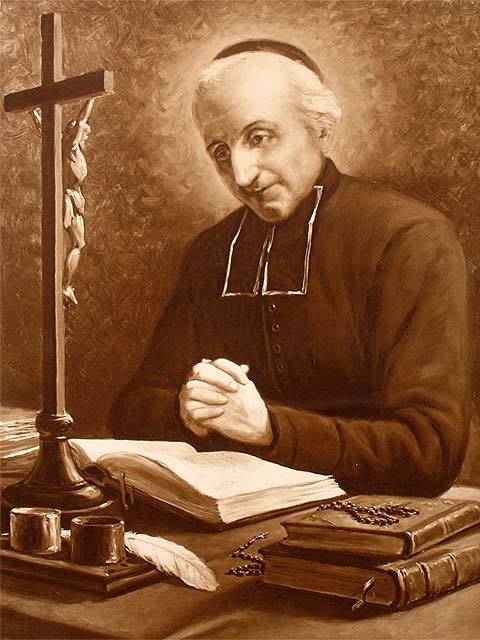
Saint André-Hubert Fournet was a French diocesan priest, born in 1752 near Poitiers, who spent much of his ministry serving the poor of rural France. During the French Revolution he refused to take the schismatic oath demanded of clergy and instead went into hiding, crossing into Spain for a time before returning secretly to minister to Catholics in his home region at great personal risk. After the Revolution subsided, he devoted himself to parish work at Maillé and, together with a laywoman named Elizabeth Bichier des Ages, founded the Daughters of the Cross (also known as the Sisters of the Cross), a religious congregation dedicated to teaching children and caring for the sick and needy in the countryside. He died in 1834 at La Puye, where the community he helped found continued its work. He was canonized in 1933, remembered as a priest whose courage under persecution matured into decades of quiet, practical charity.
Quick Facts
- Born: December 6, 1752, Saint-Pierre-de-Maillé, Vienne, France
- Died: May 13, 1834, La Puye, Vienne, France
- Feast Day: May 13
- Beatified: May 16, 1926, by Pope Pius XI
- Canonized: June 4, 1933, by Pope Pius XI
- Patron of: the Daughters of the Cross (Sisters of the Cross) and of parish priests
Who Was Saint André-Hubert Fournet?
Saint André-Hubert Fournet was a French diocesan priest, born in 1752 near Poitiers, who spent much of his ministry serving the poor of rural France. During the French Revolution he refused to take the schismatic oath demanded of clergy and instead went into hiding, crossing into Spain for a time before returning secretly to minister to Catholics in his home region at great personal risk. After the Revolution subsided, he devoted himself to parish work at Maillé and, together with a laywoman named Elizabeth Bichier des Ages, founded the Daughters of the Cross (also known as the Sisters of the Cross), a religious congregation dedicated to teaching children and caring for the sick and needy in the countryside. He died in 1834 at La Puye, where the community he helped found continued its work. He was canonized in 1933, remembered as a priest whose courage under persecution matured into decades of quiet, practical charity.
Historical Setting
Fournet’s priesthood spanned one of the most violent ruptures in the history of the French Church. The Civil Constitution of the Clergy (1790) required priests to swear an oath that placed the French state above the authority of Rome; those who refused, known as ‘non-juring’ or ‘refractory’ priests, were subject to arrest, exile, or execution during the Reign of Terror. Like many of his brother priests, Fournet chose exile and clandestine ministry over compliance, hearing confessions and offering Mass in barns, private homes, and other hidden places for Catholics who would otherwise have had no access to the sacraments. When the persecution eased under the Napoleonic Concordat of 1801, he emerged into a French Church that had to be rebuilt almost from nothing in the countryside, a task to which he devoted the rest of his priesthood.
Why the Church Venerates Saint André-Hubert Fournet
The Church honors Fournet both for his fidelity as a priest during a time when the priesthood itself could cost a man his life, and for the practical, sustained charity of his later decades. Unlike martyrs whose witness is concentrated in a single act, his holiness is venerated as something built over a long life: years of clandestine sacramental ministry followed by decades spent founding schools, hospices, and a religious community that gave rural women a stable vocation of service to the poor. His partnership with Elizabeth Bichier des Ages, herself later canonized, is remembered as a model of priest and laywoman working together to meet needs that neither could address alone.
Canonization and Feast Day
André-Hubert Fournet was beatified on May 16, 1926, and canonized on June 4, 1933, both acts of Pope Pius XI. As a modern cause, his canonization followed the ordinary process of the Church’s juridical examination of his life and virtues together with the required attribution of miracles to his intercession. His feast day is celebrated on May 13, the anniversary of his death at La Puye.
What Catholics Can Learn Today
Fournet’s life resists a single dramatic image; instead it offers a portrait of endurance. He risked his life quietly, over years, to keep the sacraments available to people who had little else, and then spent the second half of his priesthood on unglamorous, patient work: catechesis, care of the sick, the slow building of an institution meant to outlast him. For Catholics today, his example suggests that fidelity is often less about a single heroic moment than about showing up, year after year, for the tasks that quietly sustain a community’s faith.
A Prayer to Saint André-Hubert Fournet
Saint André-Hubert Fournet, priest who did not abandon your people when the world made your ministry a crime, obtain for us your steady courage. You served the hidden and the poor with equal faithfulness, whether in a hunted congregation or a rural parish rebuilt from ruin. Teach us to persevere in small, patient acts of charity, and to trust that quiet faithfulness, sustained over a lifetime, is itself a form of holiness. Watch over priests who serve in danger, and over all who labor unseen for the good of others. Amen.
Sources
- the Catholic Encyclopedia (New Advent)
- Vatican.va, canonization records of Pope Pius XI
- EWTN
- historical records of the Daughters of the Cross (Filles de la Croix)