
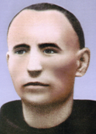
Saint André Bauer
Saints
A French-born Franciscan friar martyred with fellow missionaries at Taiyuan, China, in 1900 during the Boxer Uprising, honored among the Martyrs of China.
Saint André Bauer was born in 1866 in Guebwiller, in the Alsace region of France, and entered the Order of Friars Minor, the Franciscans, dedicating himself to missionary life in China. He served in the vicariate of Taiyuan in Shanxi province, part of a broader Franciscan mission that had been active in the region for decades, working among Chinese Catholics under the leadership of bishops and fellow friars committed to building up the local Church. In the summer of 1900, the Boxer Uprising, a violent anti-foreign and anti-Christian movement, swept through northern China with the eventual support of imperial forces, targeting foreign missionaries and Chinese Christians alike. On July 9, 1900, André Bauer was killed at Taiyuan along with his bishop, fellow friars, religious sisters, seminarians, and Chinese lay Catholics, in one of the deadliest single episodes of the Boxer-era persecution, at the age of thirty-three.
Quick Facts
- Born: November 26, 1866, Guebwiller, Haut-Rhin, France
- Died: July 9, 1900, Taiyuan, Shanxi, China, aged 33
- Religious community: Order of Friars Minor (Franciscans)
- Feast Day: July 9 (Martyrs of China, shared commemoration)
- Beatified: November 24, 1946, by Pope Pius XII
- Canonized: October 1, 2000, by Pope John Paul II, among the Martyrs of China
Who Was Saint André Bauer?
Saint André Bauer was born in 1866 in Guebwiller, in the Alsace region of France, and entered the Order of Friars Minor, the Franciscans, dedicating himself to missionary life in China. He served in the vicariate of Taiyuan in Shanxi province, part of a broader Franciscan mission that had been active in the region for decades, working among Chinese Catholics under the leadership of bishops and fellow friars committed to building up the local Church. In the summer of 1900, the Boxer Uprising, a violent anti-foreign and anti-Christian movement, swept through northern China with the eventual support of imperial forces, targeting foreign missionaries and Chinese Christians alike. On July 9, 1900, André Bauer was killed at Taiyuan along with his bishop, fellow friars, religious sisters, seminarians, and Chinese lay Catholics, in one of the deadliest single episodes of the Boxer-era persecution, at the age of thirty-three.
Historical Setting
The Boxer Uprising arose out of deep Chinese resentment toward foreign political and commercial encroachment in the late nineteenth century, resentment that extended to Christian missionaries and their converts, who were often seen as agents or beneficiaries of that foreign influence. What began as a popular movement led by the group Westerners called Boxers escalated dramatically in 1900 when the Qing imperial court, under the Empress Dowager Cixi, effectively sanctioned attacks on foreigners and Chinese Christians across northern China. Shanxi province, where André Bauer served, saw some of the worst violence of the entire uprising; the governor there personally oversaw the massacre at Taiyuan on July 9, 1900, in which dozens of missionaries, religious, and Chinese Catholics were killed together, making it one of the single largest incidents of Christian martyrdom of the modern era.
Why the Church Venerates Saint André Bauer
The Church venerates André Bauer as one of a large group of missionaries, religious, and Chinese lay Catholics who died together at Taiyuan rather than abandon the mission and the local Church they had committed their lives to serve. Their martyrdom is remembered not only as individual witness but as a shared sacrifice binding foreign missionaries and Chinese converts together in a single act of fidelity, a bond the Church has emphasized in honoring them collectively as the Martyrs of China. Their deaths are seen as a seed of the Catholic Church’s continued life in China, sustaining the faith of Chinese Catholic communities through subsequent decades of hardship.
Canonization and Feast Day
André Bauer was beatified on November 24, 1946, by Pope Pius XII, along with his fellow martyrs of Taiyuan. He was canonized on October 1, 2000, by Pope John Paul II, as one of a large group known collectively as the Martyrs of China, a canonization that drew both wide devotion and some diplomatic controversy given the political sensitivities involved. Their shared feast is kept on July 9, the anniversary of the Taiyuan massacre.
What Catholics Can Learn Today
André Bauer’s death alongside the very Chinese Catholic community he had come to serve, rather than escaping when danger grew clear, reflects a costly form of solidarity: remaining present with the people entrusted to one’s care rather than seeking safety alone. His story, largely unfamiliar to many Western Catholics today, is a reminder that the modern history of the Church includes chapters of persecution as severe as anything in the ancient world, and that the Chinese Catholic Church’s endurance through the following century of hardship rests in part on such witnesses. For readers today, his example invites reflection on what genuine solidarity with a vulnerable community actually requires when danger arrives.
A Prayer to Saint André Bauer
Saint André Bauer, missionary who crossed the world to serve the Church in China and remained faithful to your flock even to death, intercede for missionaries in every land who serve far from home. Pray for the Catholic Church in China, that it may know peace and freedom to worship, and for all Christians who face danger for their faith today. Grant us your courage to stand with the vulnerable rather than flee to safety alone. Amen.
Sources
- Vatican.va (canonization records, Pope John Paul II, 2000)
- Order of Friars Minor (Franciscans) historical archives
- the Roman Martyrology
- Encyclopaedia Britannica