Saint Alfonso Maria Fusco
Saints
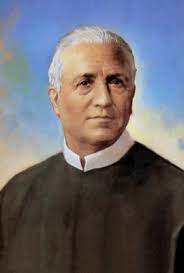
A nineteenth-century Italian diocesan priest who founded the Sisters of St. John the Baptist to educate poor children and care for orphans in his native Angri.
Saint Alfonso Maria Fusco (1839–1910) was an Italian diocesan priest of the Archdiocese of Salerno best known as the founder of the Congregation of the Sisters of St. John the Baptist, popularly called the Baptistine Sisters, a religious institute dedicated to the Christian education of poor children and orphans. Born and raised in Angri, near Salerno, Fusco was ordained in 1863 and spent his entire priestly life serving his home parish, where he became especially concerned with the poor educational and moral formation available to children in the surrounding countryside. In 1878, working with a local religious woman named Maddalena Caputo, he founded the Baptistine Sisters to run schools, orphanages, and catechetical programs for underprivileged children, an institute that spread across Italy and eventually beyond during his lifetime and after his death. Known for personal humility and a demanding schedule of parish ministry combined with the direction of his growing congregation, Fusco died in his native Angri in 1910. He was beatified in 2001 and canonized in 2016 by Pope Francis.
Quick Facts
- Born: March 23, 1839, in Angri, Salerno, Italy
- Died: February 6, 1910, in Angri, Salerno, Italy (age 70)
- Feast Day: February 6
- Beatified: October 7, 2001, by Pope John Paul II
- Canonized: October 16, 2016, by Pope Francis
- Patron of: catechists and educators of the poor
Who Was Saint Alfonso Maria Fusco?
Alfonso Maria Fusco was born in 1839 in Angri, a town near Salerno in southern Italy, and spent nearly his entire life within that same community. Ordained a priest of the Archdiocese of Salerno in 1863, he served as a parish priest in Angri, where he quickly became attentive to the poverty and lack of basic education affecting the town’s children, many of whom had little access to schooling or religious formation. Rather than simply advocate for reform from within existing structures, Fusco worked directly with a local laywoman, Maddalena Caputo, to found a new religious congregation in 1878 specifically dedicated to teaching and caring for poor and orphaned children — the Congregation of the Sisters of St. John the Baptist, named for the parish’s patron saint, and known popularly as the Baptistine Sisters. Fusco combined the demanding, largely unglamorous work of ordinary parish ministry — hearing confessions, visiting the sick, preaching, catechizing — with the equally demanding task of guiding a young religious institute through its early growth, securing its rules, recruiting and forming sisters, and expanding its schools and orphanages first through the region around Salerno and eventually further afield. He was known among those who knew him for a plain, humble manner and an intense, almost restless dedication to serving the poor and forming children in the faith, continuing this pattern of ministry until his death in his native town in 1910.
Historical Setting
Fusco’s ministry took place during a period of considerable social strain in the recently unified Kingdom of Italy, where rural areas of the south, including the region around Salerno, faced significant poverty, limited access to formal education, and a Church navigating a changed political landscape following Italian unification and the loss of the Papal States. This era saw a wave of new Italian religious congregations founded specifically to address concrete social needs — education, orphan care, nursing, and vocational training for the poor — often initiated, as in Fusco’s case, by parish priests or laypeople responding directly to needs they witnessed in their own communities rather than by established religious orders acting from a distance.
Why the Church Venerates Saint Alfonso Maria Fusco
The Church honors Fusco for the practical, sustained way he addressed the educational poverty of children in his own community, choosing to build a lasting institution rather than offer only temporary or individual acts of charity. His decades of combined parish and congregational work, carried out without seeking wider recognition and largely confined to his native Angri, reflect a model of sainthood grounded in fidelity to one’s immediate community and its concrete, unglamorous needs rather than in dramatic or far-flung achievement.
Canonization and Feast Day
Alfonso Maria Fusco was beatified by Pope John Paul II on October 7, 2001, and canonized by Pope Francis on October 16, 2016, following the Church’s standard modern process, including recognition of a miracle attributed to his intercession. His feast day is observed on February 6, the anniversary of his death.
What Catholics Can Learn Today
Fusco’s life demonstrates how enduring institutions of mercy can emerge from a single priest’s sustained attention to the needs directly in front of him, without requiring a broader stage or a more prominent career. For Catholics today, his example is an encouragement to take seriously the concrete, local needs of one’s own parish or town — the children without adequate schooling, the families without support — as a legitimate and sufficient field for a lifetime’s dedicated work, rather than waiting for a larger or more visible opportunity to do good.
A Prayer to Saint Alfonso Maria Fusco
Saint Alfonso Maria Fusco, faithful priest and father to the poor children of Angri, who gave your whole life to teaching and caring for those the world had overlooked, pray for teachers, catechists, and all who care for children in need. Help us to see the needs close at hand and to respond to them with patience and lasting commitment, rather than looking always for a grander stage. Bless the Baptistine Sisters who carry on your work, and grant us your steady, humble love for the young and the poor. Amen.
Sources
- Vatican.va, biography for the canonization of Alfonso Maria Fusco (2016)
- Sisters of St. John the Baptist (Baptistine Sisters), congregational history
- the Catholic News Agency biographical archive
- Archdiocese of Salerno-Campagna-Acerno historical records