Saint Alessandro Sauli
Saints
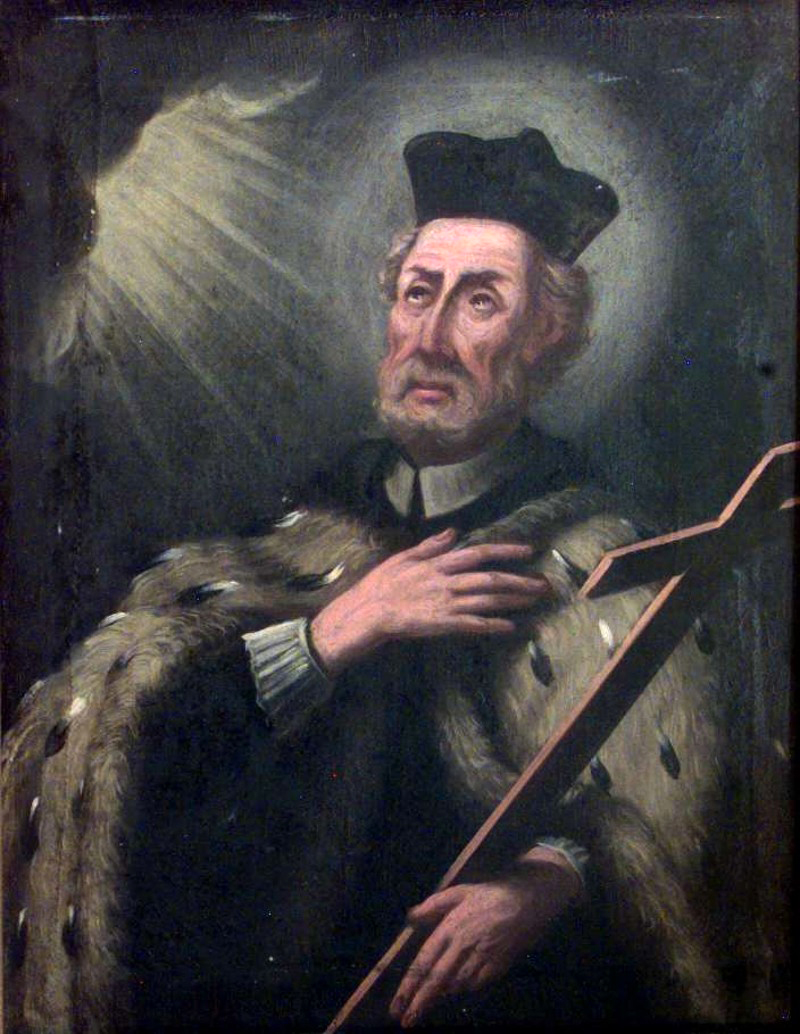
A sixteenth-century Barnabite bishop known as the Apostle of Corsica for his tireless pastoral reform of the island diocese of Aléria after the Council of Trent.
Saint Alessandro Sauli (1534–1592) was an Italian bishop and member of the Clerics Regular of Saint Paul, popularly known as the Barnabites, who became one of the most effective implementers of the reforming decrees of the Council of Trent. Born into a noble Milanese family, he joined the Barnabites as a young man, was ordained a priest, and rose to become the order’s superior general before being appointed bishop of Aléria in Corsica in 1570. There he spent more than two decades laboring to rebuild a poorly organized and neglected diocese, founding seminaries, preaching extensively in a region where formal catechesis had long been weak, and visiting remote mountain parishes personally, earning him the enduring title ‘Apostle of Corsica.’ Near the end of his life he was transferred to the more prestigious see of Pavia in Italy, where he died within the year. He was canonized in 1904 by Pope Pius X.
Quick Facts
- Born: February 15, 1534, in Milan, Italy
- Died: October 11, 1592, in Calosso, Italy (age 58)
- Feast Day: October 11
- Beatified: April 23, 1742, by Pope Benedict XIV
- Canonized: December 11, 1904, by Pope Pius X
- Patron of: the Diocese of Aléria, Corsica, and of Barnabite educators
Who Was Saint Alessandro Sauli?
Alessandro Sauli was born in 1534 to a noble Milanese family with connections to the Genoese aristocracy, and as a young man chose to enter the Clerics Regular of Saint Paul, a religious order founded earlier in the sixteenth century and known popularly as the Barnabites after the church of St. Barnabas in Milan where they first gathered. The order had been formed in part as a response to the need for renewed clerical discipline and preaching in the years surrounding the Protestant Reformation, and Sauli took readily to its mission of reform through education and rigorous pastoral care. He was ordained a priest, distinguished himself as a preacher and teacher, and was elected superior general of the Barnabites in 1567, while still a young man. In 1570, Pope Pius V appointed him bishop of Aléria, a diocese on the island of Corsica that had suffered from long neglect, poor clerical formation, and the general disruption of religious life common to peripheral regions of the period. Sauli committed himself to the diocese with striking energy, founding a seminary to properly train local clergy, preaching directly to Corsican villagers in remote and difficult terrain, promoting the decrees of the recently concluded Council of Trent in concrete pastoral terms, and working to raise both the moral and educational standard of his priests. He remained in Aléria for over twenty years before being transferred to the wealthier and more prominent diocese of Pavia in 1591, where he died the following year while traveling within the diocese.
Historical Setting
Sauli’s episcopate fell squarely within the era of Catholic reform following the Council of Trent, which had concluded in 1563 with sweeping decrees calling for better-trained clergy, resident bishops, and renewed catechesis at the local level. Many dioceses across Catholic Europe struggled to implement these reforms in practice, and Corsica, a relatively poor and isolated island under Genoese governance at the time, was among the more challenging places to do so, given its difficult terrain, dispersed population, and long history of insufficient clerical oversight. Sauli’s Barnabite order, itself a product of the broader movement toward renewed religious discipline in this period, gave him both the formation and the institutional backing to attempt a thorough reform of his diocese.
Why the Church Venerates Saint Alessandro Sauli
The Church honors Sauli as one of the outstanding bishops of the Catholic reform, a figure who did not merely accept the Council of Trent’s decrees in principle but translated them into sustained, practical pastoral labor within one of the more difficult dioceses of his day. His willingness to travel personally into remote Corsican villages to preach and catechize, rather than govern from a comfortable distance, made him a model of the resident, engaged bishop that Trent had called for, earning him lasting local devotion in Corsica alongside recognition within his own religious order as an exemplar of its founding mission.
Canonization and Feast Day
Alessandro Sauli was beatified in 1742 by Pope Benedict XIV and canonized more than a century and a half later, on December 11, 1904, by Pope Pius X, following the Church’s standard process for confirming heroic virtue and the required attributed intercessions. His feast is celebrated on October 11, the anniversary of his death.
What Catholics Can Learn Today
Sauli’s decades of patient, on-the-ground work rebuilding a neglected diocese stand as a lesson in what genuine institutional reform actually requires: not merely new rules issued from a distance, but sustained personal presence, education, and relationship-building at the local level. For Catholics involved in renewal efforts within their own parishes or communities today, his example suggests that lasting reform is rarely achieved through decree alone, but through the unglamorous, repeated work of forming people directly, over years, in difficult and often overlooked places.
A Prayer to Saint Alessandro Sauli
Saint Alessandro Sauli, faithful bishop and Apostle of Corsica, who traveled the mountain paths of your poor and scattered diocese to bring the Gospel and sound teaching to its people, pray for bishops and pastors charged with renewing tired or neglected communities today. Give them your patience, your willingness to go where few others will, and your steady commitment to forming others well. Help us, too, to bring faith not from a distance but through real presence to those who need it. Amen.
Sources
- the Catholic Encyclopedia (New Advent)
- Vatican.va, biography for the canonization of Alessandro Sauli (1904)
- Barnabite Fathers (Clerics Regular of Saint Paul), congregational history
- Encyclopaedia Britannica