
Saint Alberico Crescitelli
Saints
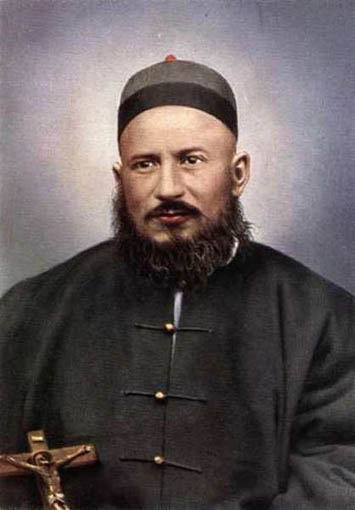
An Italian missionary priest of the Pontifical Institute for Foreign Missions who was tortured and put to death in Shaanxi province during the anti-Christian violence of 1900.
Saint Alberico Crescitelli (1863–1900) was an Italian priest of the Pontifical Institute for Foreign Missions who spent more than a decade evangelizing in Shaanxi province in northern China. Born near Avellino in southern Italy, he was ordained and sent to China in 1888, where he ministered to scattered rural Catholic communities, learned the local language, and endured years of hardship and occasional hostility toward foreign missionaries. In the summer of 1900, as the Boxer Uprising unleashed violence against Christians and foreigners across China, Crescitelli was seized near Yangxian, tortured, and killed rather than renounce his priesthood and faith. He is venerated today as one of the 120 Martyr Saints of China, a group canonized together in 2000 that includes both foreign missionaries and Chinese lay Catholics who died for the faith during that turbulent era.
Quick Facts
- Born: June 30, 1863, in Altavilla Irpina, near Avellino, Italy
- Died: July 21, 1900, near Yangxian, Shaanxi province, China (martyred, age 37)
- Feast Day: July 21 (also honored July 9 with the Martyr Saints of China)
- Beatified: February 18, 1951, by Pope Pius XII
- Canonized: October 1, 2000, by Pope John Paul II
- Patron of: PIME missionaries and the Diocese of Avellino
Who Was Saint Alberico Crescitelli?
Alberico Crescitelli was born in 1863 in the small town of Altavilla Irpina in the Campania region of southern Italy. He entered the seminary of the Pontifical Institute for Foreign Missions (known today as PIME), an Italian missionary society dedicated to sending priests to serve the Church in Asia. Ordained a priest, he was assigned to China in 1888 and spent the rest of his life in Shaanxi province, an inland region far from the coastal treaty ports where most foreigners lived. There he worked among small, often poor Catholic communities, traveling on foot between villages, studying the language and customs of the people, and building the kind of quiet, patient pastoral presence that characterized much of nineteenth-century Catholic missionary work in China. He took a Chinese name and was known locally by it. The final years of the nineteenth century saw growing resentment in parts of China toward foreign missionaries and their converts, resentment that erupted into open violence with the Boxer Uprising of 1900. Crescitelli was captured by hostile forces near Yangxian in July of that year. According to the accounts preserved by his religious institute, he was subjected to brutal torture and ultimately killed for his refusal to abandon his priestly identity and his Catholic faith, at the age of thirty-seven.
Historical Setting
Crescitelli’s death came at the height of the Boxer Uprising, a violent anti-foreign and anti-Christian movement that swept much of northern China in 1899 and 1900, fueled by resentment of foreign political and economic influence and by suspicion of Christian missionaries and their converts. Shaanxi, though somewhat removed from the epicenter of the fighting around Beijing, was not spared the unrest, and foreign priests and Chinese Catholics alike became targets. The wider context was the uneasy position of the Catholic missionary enterprise in late Qing China: missionaries like Crescitelli worked under treaty protections that many ordinary Chinese resented as instruments of foreign intrusion, even as the missionaries themselves largely devoted their energy to pastoral care, education, and charity among the poor.
Why the Church Venerates Saint Alberico Crescitelli
The Church honors Crescitelli as a martyr who gave his life rather than renounce his priesthood and his faith, joining him to the long roll of missionaries who carried Catholic teaching to China at great personal cost. His canonization alongside 119 other martyrs of China in the year 2000 deliberately paired foreign missionary priests with Chinese laypeople, catechists, and religious sisters who died in the same waves of persecution, presenting his witness not as an isolated act of foreign heroism but as part of a shared Chinese Catholic story of fidelity under violent pressure. He is particularly esteemed within PIME as one of its own who lived out the institute’s missionary charism to the point of death.
Canonization and Feast Day
Alberico Crescitelli was beatified on February 18, 1951, by Pope Pius XII, and canonized on October 1, 2000, by Pope John Paul II as part of the group known as the Martyr Saints of China. That canonization proved politically sensitive, drawing objections from the government of the People’s Republic of China, but the Holy See proceeded on the basis of the Church’s own juridical recognition of martyrdom. His principal feast day is July 21, the anniversary of his death, and he is also remembered on July 9, the shared feast of the Martyr Saints of China.
What Catholics Can Learn Today
Crescitelli’s life is a reminder that the spread of the Gospel has often depended on ordinary men willing to leave home permanently for a place whose language and customs were not their own, and to remain faithful to that commitment even as the political ground shifted violently beneath them. For contemporary Catholics, his witness is less about the drama of his death than about the years of unglamorous, patient service that preceded it — the daily work of learning, listening, and serving a people not his own. It is an invitation to consider what quiet, sustained fidelity to a difficult calling looks like, long before any moment of crisis arrives.
A Prayer to Saint Alberico Crescitelli
Saint Alberico Crescitelli, faithful priest and martyr, who left your home in Italy to serve the people of Shaanxi with patience and love, and who held fast to Christ even to the point of torture and death, obtain for us your courage in the face of hostility and your gentleness in the face of strangers. Teach missionaries and all who labor far from home to persevere quietly in love, and teach us who remain safe at home never to take our faith for granted. Pray for the Church in China, for persecuted Christians everywhere, and for the grace to remain faithful whatever the cost. Amen.
Sources
- the Catholic Encyclopedia (New Advent)
- Vatican.va, biography for the canonization of the Martyr Saints of China (2000)
- PIME (Pontifical Institute for Foreign Missions) historical archives
- the Roman Martyrology