
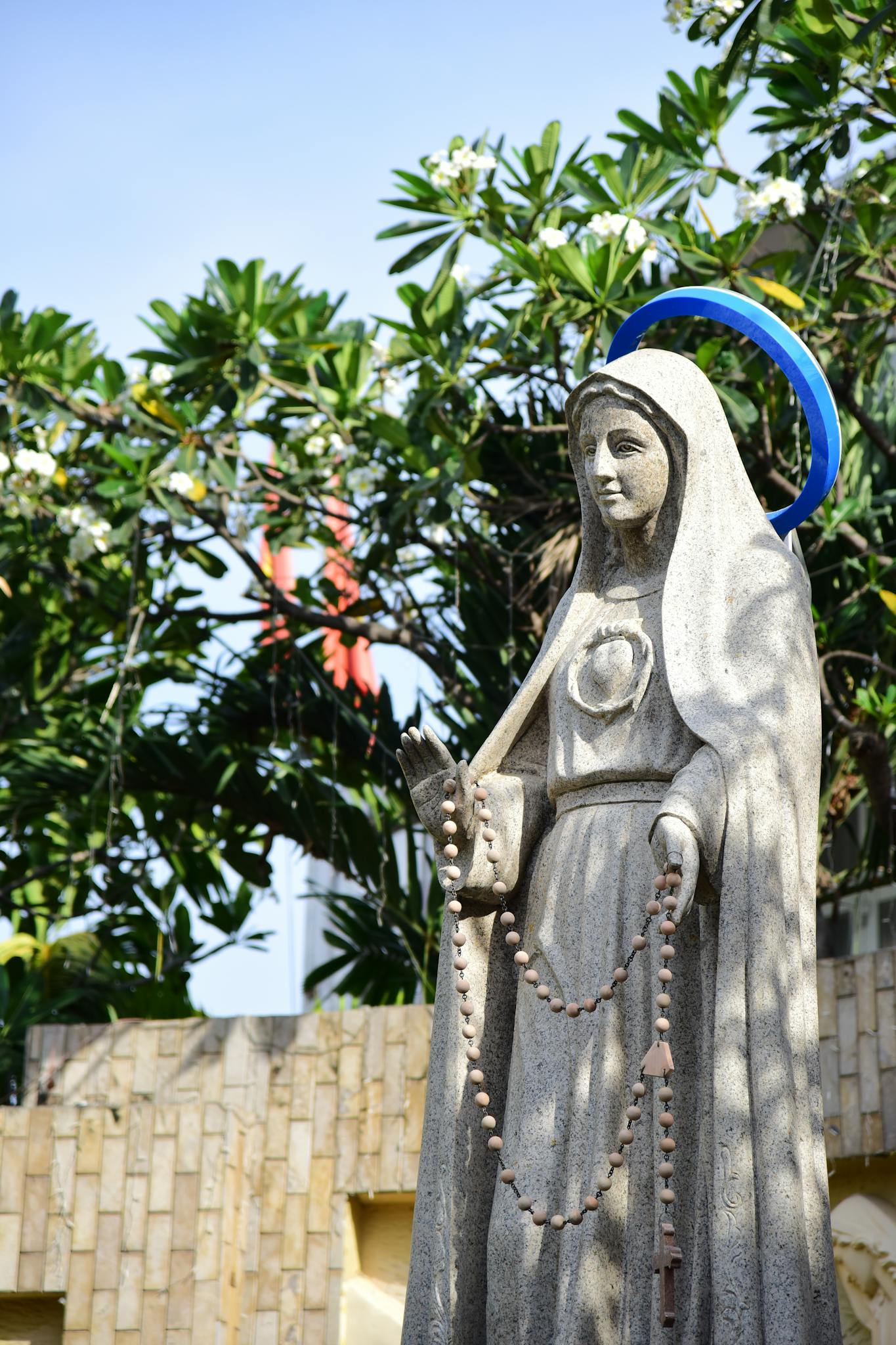
Saint Aidan of Ferns
Saints

An early Irish bishop-abbot, also known as Máedóc, who founded the influential monastery of Ferns and became one of the patron saints of County Wexford.
Saint Aidan of Ferns, also known by his Irish name Máedóc (or Mogue), was an early Irish bishop and monastic founder, traditionally dated to the late sixth and early seventh centuries, born around 558 in what is now County Cavan. According to the traditions preserved about him, he trained for a time in Wales, where later legend closely associates him with the great Welsh bishop Saint David, before returning to Ireland to found and lead a series of monastic communities, most notably the monastery at Ferns in County Wexford, which he governed as bishop-abbot from around 598 until his death. Ferns grew under his leadership into one of the significant ecclesiastical centers of early medieval Ireland, and Aidan became venerated across the southeast of Ireland as its patron. He died around 632, and though he predates any formal canonization process, his sanctity was formally confirmed through an equipollent canonization in 1902.
Quick Facts
- Born: traditionally c. 558, County Cavan, Ireland
- Died: traditionally January 31, 632, Ferns, Ireland
- Feast Day: January 31
- Canonized: June 19, 1902 (equipollently, confirming ancient veneration)
- Patron of: Ferns and County Wexford, Ireland
Who Was Saint Aidan of Ferns?
Saint Aidan of Ferns, known in Irish tradition as Máedóc (sometimes anglicized Mogue), belongs to the formative generation of early Irish monasticism that flourished in the sixth and seventh centuries, an era in which Ireland, evangelized only a few generations earlier, was rapidly developing its own distinctive monastic Christian culture centered on powerful abbatial founders rather than a diocesan structure of the later kind. As with many saints of this period, the surviving accounts of Aidan’s life come primarily from later medieval hagiographies, composed centuries after his death to honor and promote the monasteries associated with his name, so specific biographical details should be read as devotional tradition rather than strictly verified history. Tradition holds that he was born around 558, possibly in the area of County Cavan, and that as a young man he traveled to Wales, where he is said to have studied under, or been closely associated with, Saint David, the great patron of Wales — a connection that, whether historically precise or a later literary embellishment linking two celebrated founders, reflects the genuine and well-documented traffic of monks and monastic learning between Wales and Ireland during this period. Returning to Ireland, Aidan is credited with founding several monastic communities before settling at Ferns in what is now County Wexford, where around 598 he became bishop-abbot of a monastery that would grow into one of early medieval Ireland’s notable centers of learning and pastoral care. He governed Ferns for over three decades, dying there around 632. Over the following centuries his cult spread widely across southeastern Ireland, and he became firmly established as the patron of Ferns and, eventually, of the wider county and diocese that took shape around it.
Historical Setting
Aidan’s life falls within the golden age of early Irish monasticism, a period following Ireland’s conversion to Christianity in the fifth century in which the Church on the island organized itself primarily around powerful monastic foundations, each governed by an abbot (frequently also a bishop) whose authority often extended well beyond a single community to a wider network of dependent churches and lands. Monasteries of this era, including Ferns under Aidan, functioned as centers not only of worship but of learning, manuscript production, and local social organization, and their founders were remembered and venerated by later generations largely through hagiographies written to secure the prestige, land claims, and pilgrimage traffic of the monastic houses that bore their names.
Why the Church Venerates Saint Aidan of Ferns
The Church venerates Aidan of Ferns as one of the foundational figures of Christianity in southeastern Ireland, whose establishment of the monastery at Ferns provided a lasting center of religious life, learning, and pastoral organization for the region across many centuries. His veneration, sustained locally and continuously from the early medieval period onward, reflects the enduring importance Irish Christian communities placed on their founding abbot-bishops as spiritual fathers whose intercession and example remained a living presence in the life of the communities they had established, long after the historical particulars of their lives had passed into legend.
Canonization and Feast Day
Like most saints of the early Irish Church, Aidan of Ferns predates the formal, centralized canonization process that developed in the Catholic Church from the high Middle Ages onward; his sanctity rests instead on an ancient and continuous local cult recognized by the wider Church. This long-standing veneration received formal papal confirmation through an equipollent canonization in 1902, a process by which the Holy See extends the honors of sainthood, including inclusion in the universal Roman Martyrology, to a figure whose cult already enjoys immemorial, well-documented veneration, without a new investigative process. His feast is kept on January 31, the traditional date of his death.
What Catholics Can Learn Today
Aidan of Ferns’s life, transmitted to us mostly through legend built up around a genuine historical founder, is a useful reminder that the Church’s memory of its early saints often blends documented fact with the devotional storytelling of later generations who wished to honor them — and that this blending does not diminish the saint’s real historical importance so much as testify to how deeply communities valued what such founders had given them. For Catholics today, his example as a bridge-builder between the Welsh and Irish churches of his time also speaks to the value of learning and formation received from beyond one’s own community, carried home and used to build something lasting.
A Prayer to Saint Aidan of Ferns
Saint Aidan of Ferns, founder and shepherd of a community that has honored you across fourteen centuries, you carried the learning you gathered abroad back home to build something that would outlast you. Pray for those who found new communities of faith today, that they may build with the same patience and the same trust in what they cannot yet see completed. Watch over the people of Ferns and Wexford who still claim you as their own, and intercede for all who labor quietly to leave a lasting inheritance of faith to those who come after them. Amen.
Sources
- the Catholic Encyclopedia (New Advent), entry on Saint Máedóc of Ferns
- the Roman Martyrology
- Encyclopaedia Britannica, entries on early Irish monasticism
- Diocese of Ferns, historical records on its patron saint