
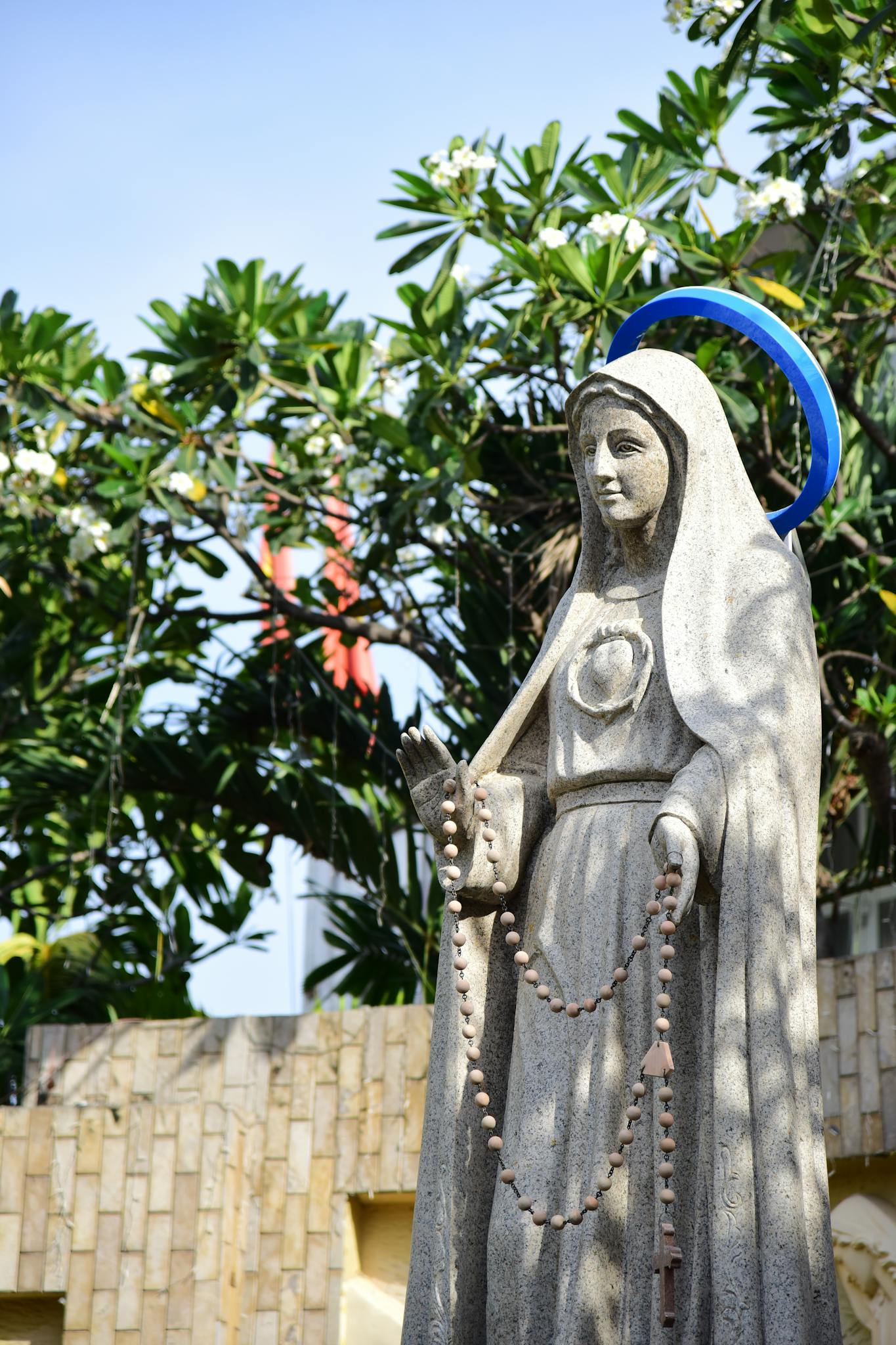
Saint Agnes Cao Guiying
Saints

A widowed Chinese catechist from Guizhou who guided fellow Christians to safety before being captured and executed in Guangxi in 1856.
Saint Agnes Cao Guiying (Chinese: 曹桂英, also known as Agnes Tsao Kou Ying) was a Chinese Catholic laywoman and widow, born around 1821 in Wujiazhai in Guizhou province, who worked as a catechist helping to instruct and shepherd Christians in a region where the faith was tolerated only precariously under the Qing dynasty. In 1856, while attempting to lead a group of Christians to safety, she was captured near Xilin in Guangxi province and, after enduring imprisonment and torture for refusing to renounce her faith or betray the local missionary priest, was executed on March 1, 1856, at about thirty-four years of age. Her martyrdom occurred amid rising local hostility toward Christian missions in southern China that, within months, contributed to the broader international incident known as the Second Opium War. She was canonized in 2000 among the 120 Martyrs of China.
Quick Facts
- Born: c. 1821, Wujiazhai, Guizhou, China
- Died: March 1, 1856, Xilin, Guangxi, China
- Feast Day: July 9 (with the Martyrs of China)
- Canonized: October 1, 2000, Rome, by Pope John Paul II
- Patron of: catechists; invoked by widows and converts in mission territories
Who Was Saint Agnes Cao Guiying?
Saint Agnes Cao Guiying was born around 1821 in Wujiazhai, a village in the mountainous southwestern province of Guizhou, an area where the Catholic faith had spread gradually through the work of Chinese converts and the intermittent, often clandestine presence of foreign missionaries operating under the restrictions and periodic outright bans of the Qing dynasty. Widowed at some point in her life, she took on the role of catechist, a position of real responsibility within communities that frequently had no resident priest and depended on trained laypeople, often women, to teach the faith, prepare converts for baptism, and hold communities together between rare missionary visits. In 1856 she was traveling with or guiding a group of fellow Christians, evidently trying to move them to a place of greater safety as anti-Christian sentiment and local persecution intensified in the border region between Guizhou and Guangxi. She was captured near Xilin in Guangxi and imprisoned along with a French missionary priest, Auguste Chapdelaine, who was executed shortly before her. Agnes endured harsh interrogation and torture, refusing under pressure to renounce her faith, and was beheaded on March 1, 1856, at roughly thirty-four years old. Her death, alongside Father Chapdelaine’s, became internationally significant almost immediately: French outrage over the killing of a French missionary contributed to the diplomatic and military tensions that helped trigger the Second Opium War later that same year, giving her martyrdom an unusually well-documented historical afterlife compared to many lay Chinese martyrs of the period.
Historical Setting
Agnes Cao Guiying died at a volatile moment in the history of Christianity in China. Officially tolerated under treaties forced on the Qing government by Western powers earlier in the nineteenth century, Catholic missionary activity remained deeply unpopular with many local officials and gentry in China’s interior provinces, who viewed foreign priests and their Chinese converts with suspicion as agents of foreign influence. Guangxi and Guizhou, remote from the treaty ports where missionaries operated more openly, were especially dangerous for both foreign clergy and native catechists. The execution of Father Chapdelaine and Agnes Cao Guiying in 1856 became one of the pretexts cited by France for joining Britain’s military campaign against the Qing government, a conflict that reshaped China’s relationship with Western powers for decades.
Why the Church Venerates Saint Agnes Cao Guiying
The Church honors Agnes Cao Guiying both as a martyr who died for refusing to deny her faith and as an example of the vital, often underappreciated role Chinese laywomen played as catechists in sustaining Christian communities without adequate clergy. Her willingness to lead fellow believers toward safety at real risk to herself, and her endurance of torture rather than betrayal of Father Chapdelaine or her fellow Christians, exemplify the courage and practical responsibility carried by native catechists across the history of the Church in China, a role the Vatican specifically recognized when it canonized her among the broader group of China’s martyrs.
Canonization and Feast Day
Agnes Cao Guiying was beatified on May 27, 1900, and canonized on October 1, 2000, when Pope John Paul II canonized 120 Martyrs of China — Chinese Catholics and missionaries killed between the mid-seventeenth and early twentieth centuries — under the collective title of Saint Augustine Zhao Rong and Companions. As part of this canonized group, her feast is kept on the shared date of July 9, the Church’s commemoration of the Martyrs of China.
What Catholics Can Learn Today
Agnes Cao Guiying’s death while actively trying to protect others — leading a group of Christians toward safety rather than fleeing alone — highlights that martyrdom in the Christian tradition is frequently bound up with concrete acts of care for a community, not simply passive endurance. Her example challenges Catholics today to consider whether their own faith moves them toward active responsibility for others, especially the vulnerable, and reminds believers that costly faithfulness and practical charity are, in the lives of the saints, very often the same act seen from two angles.
A Prayer to Saint Agnes Cao Guiying
Saint Agnes Cao Guiying, widow and catechist, you led others toward safety even as danger closed in around you, and you would not betray your faith or your companions under torture. Teach us your courage that puts others first. Watch over catechists and teachers of the faith in every land where Christians are still endangered, and pray for us, that when our own faith is tested, we might think first of those who depend on us rather than of our own safety. Amen.
Sources
- Vatican.va, Homily of Pope John Paul II at the Canonization of Augustine Zhao Rong and 119 Companions, October 1, 2000
- the Roman Martyrology
- Encyclopaedia Britannica, entries on the Second Opium War and Christian missions in China
- the Catholic Encyclopedia (New Advent), background on Catholic missions in Qing-era China