
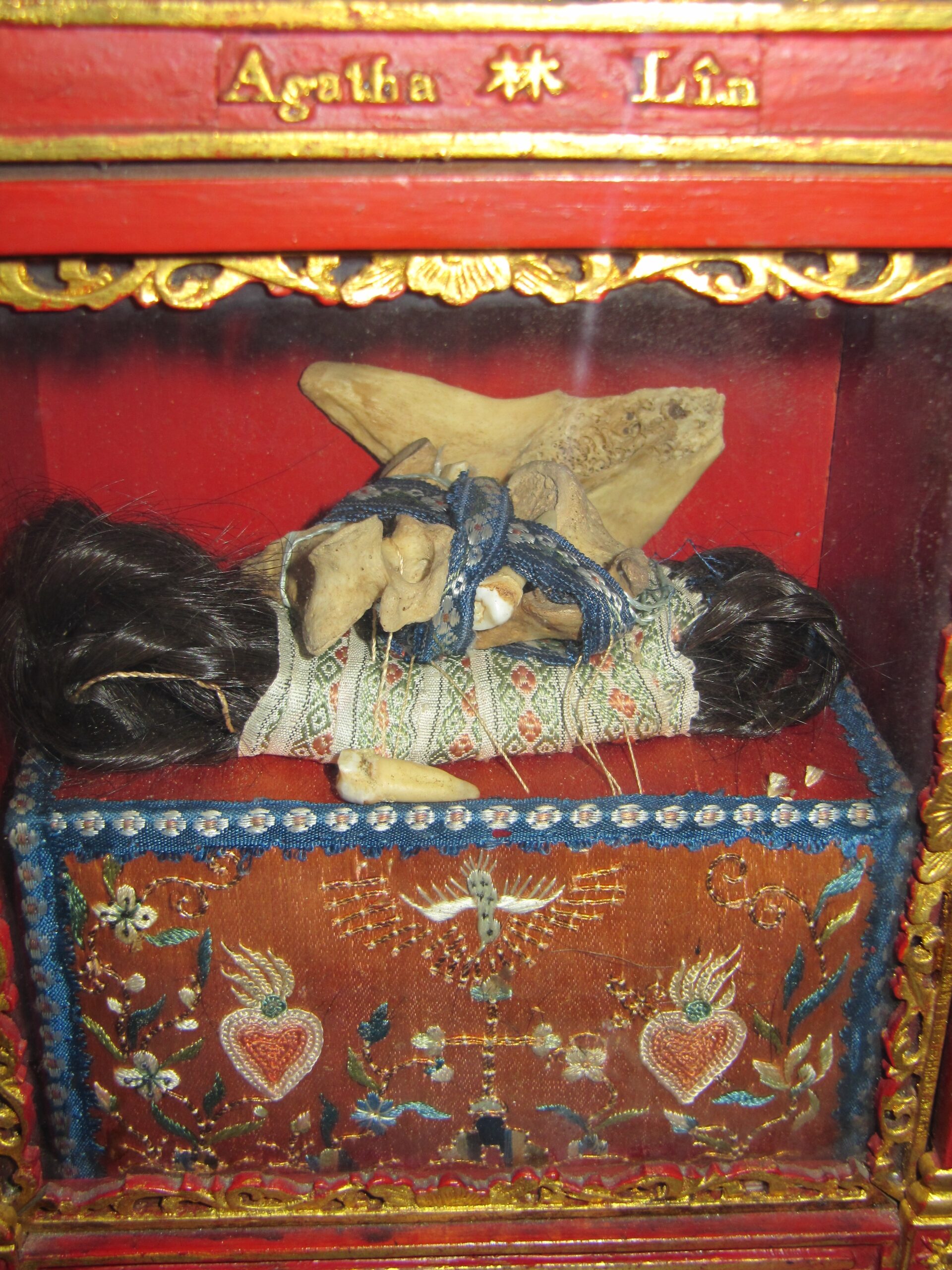
Saint Agatha Lin Zhao
Saints
A Chinese Catholic catechist from Guizhou province martyred in 1858 amid rising persecution of Christians in nineteenth-century China.
Saint Agatha Lin Zhao was a Chinese Catholic laywoman and catechist from Guizhou province, put to death on 28 January 1858 during a local persecution of Christians under provincial authorities hostile to the growing Catholic presence in the region. Born around 1817 in Qinglong County, she served her local Catholic community as a catechist, a role of real importance in nineteenth-century Chinese Catholicism, where lay teachers, often women, carried much of the day-to-day work of instructing converts and sustaining small, isolated Christian communities between the infrequent visits of missionary priests. Her execution at Maokou in Langdai came amid rising regional hostility toward Christianity in southwestern China during the 1850s, a decade of mounting tension between Chinese officials and the foreign missionary presence protected by unequal treaties following the Opium Wars. She is honored today as one of 120 Martyrs of China, canonized together in 2000.
Quick Facts
- Born: c. 1817, traditionally dated, Qinglong County, Guizhou Province, China
- Died: 28 January 1858, Maokou, Langdai, Guizhou Province, China, aged about 40
- Feast Day: July 9, with the Martyrs of China; also commemorated locally on 28 January
- Beatified: 2 May 1909, by Pope Pius X
- Canonized: 1 October 2000, by Pope John Paul II
- Patron of: Honored among the 120 Martyrs of China; catechists
Who Was Saint Agatha Lin Zhao?
Agatha Lin Zhao was a Chinese Catholic laywoman and catechist from Guizhou province, put to death on 28 January 1858 during a local persecution of Christians under provincial authorities hostile to the growing Catholic presence in the region. Born around 1817 in Qinglong County, she served her local Catholic community as a catechist, a role of real importance in nineteenth-century Chinese Catholicism, where lay teachers, often women, carried much of the day-to-day work of instructing converts and sustaining small, isolated Christian communities between the infrequent visits of missionary priests. Her execution at Maokou in Langdai came amid rising regional hostility toward Christianity in southwestern China during the 1850s, a decade of mounting tension between Chinese officials and the foreign missionary presence protected by unequal treaties following the Opium Wars. Detailed personal biography beyond her role as catechist and the circumstances of her death is not extensively preserved. She is honored today as one of 120 Martyrs of China, canonized together in 2000.
Historical Setting
Agatha Lin Zhao’s death took place in Guizhou province during a decade of sharpening conflict between Chinese provincial authorities and the expanding Catholic missionary presence in China, protected since the 1840s by treaty rights that many local officials and gentry deeply resented as foreign intrusion. The province had already seen violence against Christians in the years leading up to 1858, and the broader atmosphere of suspicion toward Catholicism, heightened nationally by the killing of the French missionary Auguste Chapdelaine in neighboring Guangxi in 1856, an event that became a pretext for renewed European military intervention in China, left local Catholic communities like Agatha’s exposed to periodic crackdowns by provincial officials determined to suppress the foreign faith.
Why the Church Venerates Saint Agatha Lin Zhao
The Church venerates Agatha Lin Zhao as a laywoman whose service as a catechist placed her at the heart of her community’s religious life long before her martyrdom, teaching the faith to others in a Church that depended heavily on lay catechists to bridge the long gaps between visits from ordained missionaries. Her death for that same faith she had spent her life transmitting to others is honored as the natural completion of a life already given over to the Gospel in daily, unglamorous service, rather than a witness that stood apart from how she had actually lived.
Canonization and Feast Day
Agatha Lin Zhao’s cause proceeded together with those of numerous other Chinese Catholics martyred across different provinces and decades of the nineteenth century. Pope Pius X beatified a first group of Chinese martyrs, including Agatha, on 2 May 1909, and Pope John Paul II canonized 120 Martyrs of China as a group on 1 October 2000. The Martyrs of China share a collective feast on 9 July, the date associated with the largest number of the group’s deaths, though local Chinese Catholic communities sometimes also mark individual martyrs on the specific date of their own death.
What Catholics Can Learn Today
Agatha Lin Zhao’s life as a catechist before her martyrdom reminds Catholics today that the most important service to the faith is often the quiet, ongoing work of teaching and forming others, not only the dramatic moment of public witness that later brings recognition. Her death, following years spent helping her own community understand and live the Gospel, suggests that fidelity in small, faithful teaching, sustained without fanfare, prepares a person for whatever greater test may eventually come.
A Prayer to Saint Agatha Lin Zhao
Saint Agatha Lin Zhao, faithful catechist and martyr of Guizhou, you spent your life teaching others the faith you loved, and you gave that same faith back to God completely when your own test came. Pray for catechists and teachers of the faith everywhere, that they may serve as humbly and faithfully as you did. Intercede for the Church in China, still finding its way amid difficulty, that it may know the same quiet courage that carried you to the end. Help me to teach what I believe not only with words but with the witness of my life. Amen.
Sources
- Vatican.va (canonization of the Martyrs of China, 2000)
- the Roman Martyrology
- the Catholic Encyclopedia (New Advent)
- Encyclopaedia Britannica