
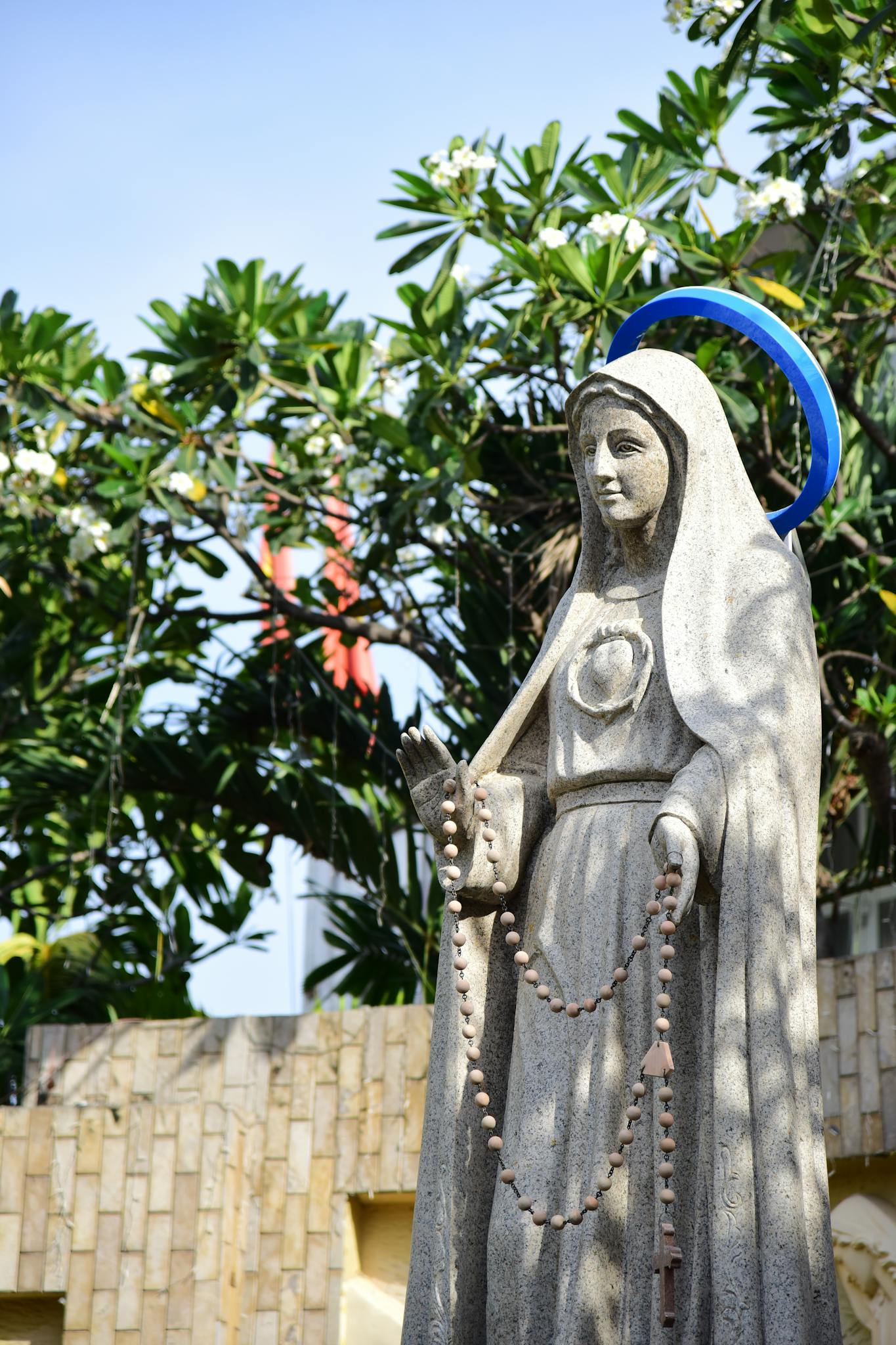
Reparation to the Immaculate Heart
Devotions
The Fatima-rooted spirituality of offering prayer and penance to console Mary’s Immaculate Heart, lived out through several concrete practices.
Reparation to the Immaculate Heart is the broader Fatima-rooted spirituality of offering prayer and penance to console Mary’s Immaculate Heart for sin, expressed through practices that include the Rosary, the Brown Scapular, holy hours of reparation, and most formally the Five First Saturdays. It flows from the doctrine of the Communion of Saints rather than any transaction that pays down a debt owed to Mary.
Quick Facts
- Category: Marian Devotions — Immaculate Heart
- Origin: Rooted in the twentieth-century Fatima apparitions
- Associated Saint: The Fatima tradition and Sr. Lucia dos Santos
- Observance: Practiced through various concrete forms, most formally the Five First Saturdays
- Church status: an established devotion of reparation, exercised through existing sacramental and devotional practice
- Private revelation: connected to the Church-recognized 1917 Fatima apparitions and a further 1925 private vision reported by Sr. Lucia; not binding on Catholic belief
What Is This Devotion?
Reparation to the Immaculate Heart is the broader spirituality, rooted in the Fatima apparitions, of offering prayer and penance to console Mary’s Immaculate Heart for sins committed against God and, as she is reported to have described it, against herself. This page covers that broader spirituality and its various concrete expressions; our dedicated page on the Five First Saturdays covers one specific, formally structured devotion that grew out of this same spirituality in full detail.
Origin and History
The spirituality traces to the apparitions reported by three shepherd children — Lucia dos Santos and her cousins Francisco and Jacinta Marto — near Fatima, Portugal, in 1917, which the Bishop of Leiria declared worthy of belief in 1930. According to Lucia’s account, the July 1917 apparition included a vision in which Mary asked that sinners be shown mercy through devotion to her Immaculate Heart, and later apparitions developed this theme of reparation further, culminating in a specific December 1925 vision at Pontevedra, Spain — covered in full on our Five First Saturdays page — that gave reparation its most concrete and lasting devotional shape.
Catholic Theology
Reparation is a share in Christ’s own redemptive offering, not a separate transaction that pays a debt somehow owed to Mary; it flows from the doctrine of the Communion of Saints, by which the prayer and penance of one member of the Church can be united with Christ’s own sacrifice for the good of others. Consoling the Immaculate Heart, understood this way, is one more concrete form of uniting oneself to Christ’s own reparative love for sinners, offered through Mary rather than apart from her.
How to Practice It
- The Five First Saturdays devotion.
- Praying the Rosary regularly with the intention of reparation.
- A Holy Hour of Reparation.
- Wearing the Brown Scapular as a daily sign of this same Marian entrustment.
- Small personal acts of prayer, fasting, or sacrifice offered with this intention.
Associated Prayers
When It’s Observed
There is no single fixed day for this broader spirituality. The First Saturday devotion gives it its most structured timing, but reparation in this spirit can be practiced at any time, through any of its several concrete forms.
Church Status
This is an established devotion, always meant to be exercised through the Church’s own sacramental and devotional life — confession, the Eucharist, the Rosary — rather than as a parallel spiritual system of its own. Per the Directory on Popular Piety and the Liturgy’s general principles, it remains subordinate to, and in support of, the liturgy.
Private Revelation
As with the Five First Saturdays, the request for reparation to the Immaculate Heart rests on the reported 1917 Fatima apparitions, approved as worthy of belief in 1930, and on Sr. Lucia’s later reported 1925 vision. Belief in these reports is not required of Catholics and does not belong to the deposit of faith (CCC §67); Catholics are free to embrace this spirituality without that embrace being treated as a matter of defined doctrine.
Common Misconceptions
“Reparation means trying to make up for sin because God’s forgiveness alone isn’t enough.”
Reparation does not supplement or complete Christ’s forgiveness, which is already entirely sufficient. It is instead a way of uniting one’s own prayer and penance with Christ’s own reparative love, out of gratitude and solidarity with him, not because forgiveness would otherwise be incomplete.
Frequently Asked Questions
Is reparation to the Immaculate Heart the same as the Five First Saturdays?
They are closely related but not identical. Reparation to the Immaculate Heart is the broader spirituality; the Five First Saturdays is one specific, formally structured devotion that grew out of it. See our dedicated page on that devotion for its full particulars.
Do I have to practice every form of reparation to the Immaculate Heart?
No. These are complementary practices rather than a required checklist; a person might take up one, several, or all of them according to their own circumstances and spiritual life.
How is reparation to the Immaculate Heart different from reparation to the Sacred Heart of Jesus?
Both share the same underlying theology of reparation, but they are distinct devotions with different origins: reparation to the Sacred Heart flows from St. Margaret Mary Alacoque’s seventeenth-century visions, while reparation to the Immaculate Heart flows from the twentieth-century Fatima apparitions. Many Catholics practice both.
Is this devotion required for salvation?
No. It is a recommended, non-obligatory devotion. Salvation comes through Christ, received through faith, the sacraments, and a persevering life of grace, which this devotion supports rather than replaces.
Sources
- Directory on Popular Piety and the Liturgy: Principles and Guidelines (2001)
- Catechism of the Catholic Church, §§1667–1679
- Sanctuary of Fatima — official shrine website