Our Lady of Lebanon
Devotions
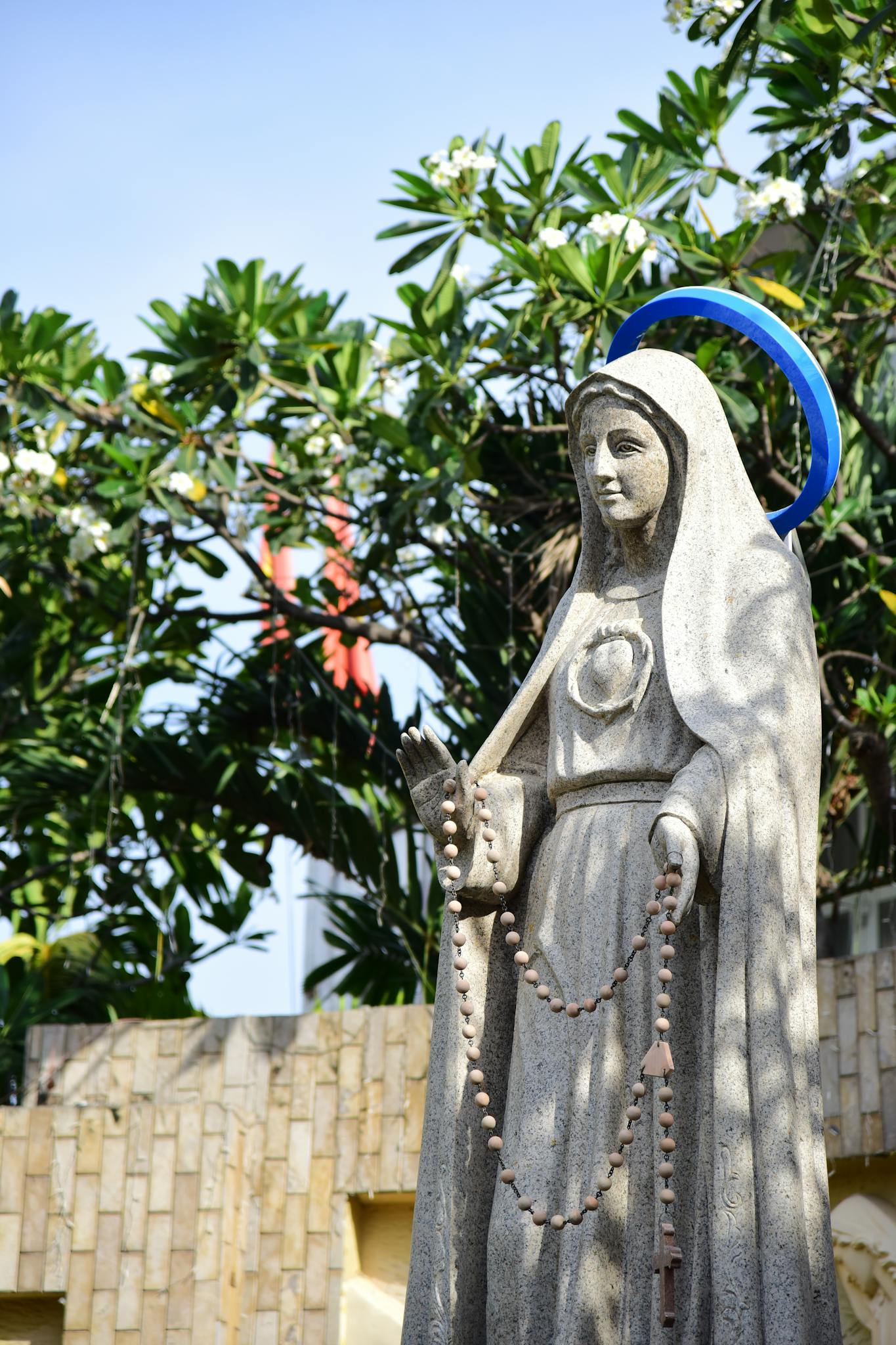
The vast bronze statue overlooking Beirut from the hilltop of Harissa, visited by three popes and honored as patroness of the Lebanese people.
Our Lady of Lebanon is a Marian devotion centered on a massive white bronze statue of Mary, arms outstretched toward Beirut, erected on the hilltop of Harissa above the Lebanese coast and dedicated in 1908. Pope John Paul II celebrated Mass there in 1997, Pope Benedict XVI signed the apostolic exhortation Ecclesia in Medio Oriente at the adjoining basilica in 2012, and Pope Leo XIV met with Lebanon’s clergy and pastoral workers at the shrine in December 2025, underscoring its continuing role as a spiritual center for Lebanon’s Catholics and a symbol of unity for the country as a whole.
Quick Facts
- Category: Marian Apparitions and Shrines — Major International Devotions
- Origin: A bronze statue erected on the hilltop of Harissa, north of Beirut, Lebanon, founded by the Maronite Congregation of Lebanese Missionaries in 1904 and dedicated in 1908
- Feast: First Sunday of May (Lebanon)
- Church status: An ecclesially recognized national shrine and devotion; Our Lady of Lebanon is honored as patroness of the Lebanese people and has received sustained papal attention, including visits by three popes
- Private revelation: Not necessary to the devotion as a matter of faith; the devotion rests on the statue and shrine’s history rather than a reported apparition
What Is This Devotion?
Devotion to Our Lady of Lebanon centers on an immense white-painted bronze statue of Mary, arms outstretched as if embracing the city of Beirut spread out below, standing atop a stone pedestal on the hilltop of Harissa, roughly twenty kilometers north of the capital. Named Queen of Lebanon by the Maronite Patriarch when the statue was dedicated, she has become a genuine symbol of national unity in a country whose Christian and Muslim communities both regard the site with respect, and pilgrims and visitors of many backgrounds climb the hill or ride its cable car to reach the statue and the modern basilica built beside it.
Origin and History
The shrine was founded in 1904 by the Congregation of Maronite Lebanese Missionaries, on land donated for the purpose, and the statue itself — cast in bronze in France, standing roughly eight and a half meters tall and weighing some fifteen tons, assembled from seven sections atop its stone pedestal — was inaugurated on May 3, 1908. The Maronite Patriarch proclaimed her Queen of Lebanon at the dedication, a title that has endured alongside Our Lady of Lebanon ever since. A modern basilica, dedicated to St. Paul, was later built beside the statue to accommodate the large crowds of pilgrims the shrine continued to draw through the twentieth century, a period that included Lebanon’s own civil war, during which the shrine remained a point of reference for Christians and, notably, for many Muslim Lebanese as well.
The shrine’s international profile grew through a series of papal visits. Pope John Paul II visited Harissa on May 10, 1997, presiding at a liturgical celebration at the basilica and signing the post-synodal apostolic exhortation A New Hope for Lebanon during his visit, though the exhortation’s own formal dateline names Beirut, where his journey concluded the next day. Pope Benedict XVI returned on September 14, 2012, as part of his official apostolic journey to Lebanon, signing the post-synodal apostolic exhortation Ecclesia in Medio Oriente at St. Paul’s Basilica in Harissa; he then formally presented and delivered the document two days later at a Mass on the Beirut waterfront, addressed to the Catholic Church across the Middle East. Most recently, Pope Leo XIV visited the shrine on December 1, 2025, meeting with Lebanon’s bishops, priests, consecrated men and women, and pastoral workers there during his own apostolic journey to the country — a visit that underscored, once again, the shrine’s continuing role as a spiritual anchor for Lebanon’s Catholic community.
Catholic Theology
The statue’s most striking feature, arms open wide toward Beirut and the country beyond, expresses in physical form the ordinary Catholic conviction that Mary’s intercession embraces an entire people, not merely individual devotees who visit her shrine. In a country whose modern history has included prolonged conflict and continuing hardship, devotion to Our Lady of Lebanon has taken on particular meaning as a prayer for national protection and reconciliation, offered by Christians and received with respect by many of Lebanon’s other religious communities as well.
How to Practice It
- Make a pilgrimage to the Shrine of Our Lady of Lebanon at Harissa, if able, ascending by the cable car or on foot.
- Pray for Lebanon and its people, invoking Mary’s intercession under this title as the country’s Marian patroness.
- Mark the first Sunday of May with prayer, the shrine’s local feast day.
- Reflect on the popes’ repeated visits to Harissa as a sign of the shrine’s continuing importance for the whole Church in the Middle East, not for Lebanon’s Catholics alone.
Associated Prayers
When It’s Observed
The first Sunday of May is kept locally in Lebanon as the feast of Our Lady of Lebanon; it is not on the General Roman Calendar for the universal Church, remaining a national observance tied to the Maronite Church and the wider Lebanese Catholic community.
Church Status
Our Lady of Lebanon holds strong, sustained official standing: founded under the Maronite Congregation of Lebanese Missionaries in 1904, proclaimed with the title Queen of Lebanon at its 1908 dedication, and visited by three popes in turn — John Paul II in 1997, Benedict XVI in 2012 and Leo XIV in 2025 — each of whom used the shrine as a setting for major statements addressed to Lebanon or the wider Middle East. The Church’s recognition here concerns the legitimacy and deep pastoral significance of the devotion and shrine, resting on its history and continued fruitfulness rather than on any reported apparition.
Common Misconceptions
“Our Lady of Lebanon is a devotion only for Lebanon’s Christians.”
In practice, the shrine has long been treated as common ground well beyond Lebanon’s Christian community. Visitors from Lebanon’s Muslim communities regularly climb the hill at Harissa alongside Christian pilgrims, and the statue’s welcoming, outstretched pose has made it a widely respected symbol of the whole country’s unity, not a devotion confined to one religious group within it.
Frequently Asked Questions
How large is the statue at Harissa?
The bronze statue stands roughly eight and a half meters tall and weighs approximately fifteen tons, cast in France in seven sections and assembled atop a stone pedestal on the hilltop, with the whole structure rising well above the surrounding landscape and visible for miles.
What did Pope Benedict XVI sign at Harissa in 2012?
He signed the post-synodal apostolic exhortation Ecclesia in Medio Oriente at St. Paul’s Basilica beside the statue on September 14, 2012, addressed to the Catholic Church throughout the Middle East, during his official apostolic journey to Lebanon.
Has any pope visited Harissa recently?
Yes. Pope Leo XIV visited the shrine on December 1, 2025, meeting with Lebanon’s bishops, priests, consecrated men and women, and pastoral workers there, continuing the pattern of direct papal attention the shrine has received across three pontificates.
Sources
- Benedict XVI, Signing of Ecclesia in Medio Oriente at Harissa (14 September 2012)
- Leo XIV, Meeting with Clergy and Pastoral Workers at the Shrine of Our Lady of Lebanon (1 December 2025)
- Directory on Popular Piety and the Liturgy: Principles and Guidelines (2001)