Our Lady of Lanka
Devotions
The title Pope Pius XII gave Sri Lanka’s principal Catholic patroness in 1948, honored at the National Basilica at Tewatta, distinct from the island’s other major shrine at Madhu.
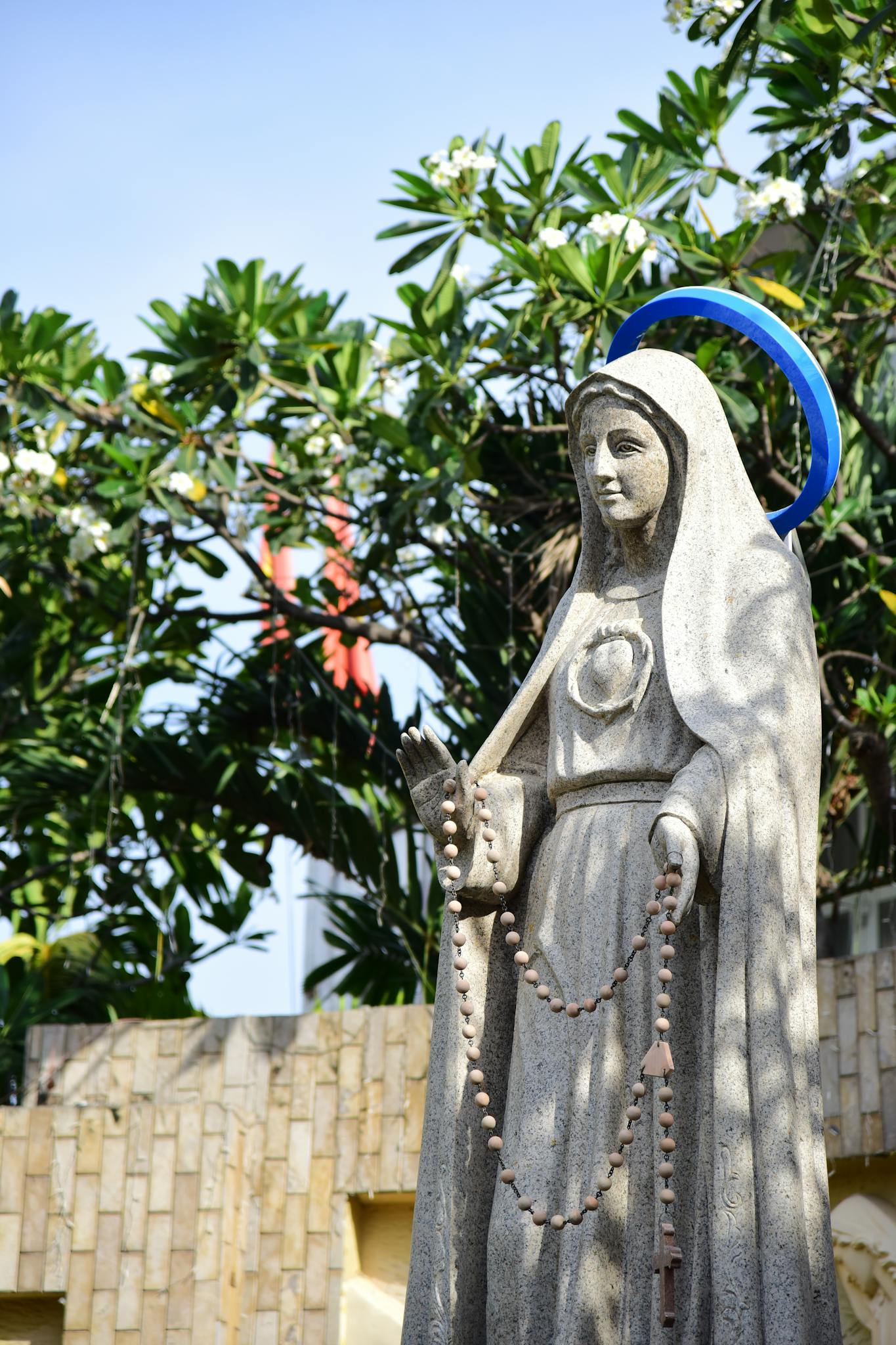
Our Lady of Lanka is the title Pope Pius XII gave in 1948 to Mary Immaculate as principal Roman Catholic patroness of Sri Lanka, honored today at the National Basilica of Our Lady of Lanka in Tewatta, near Colombo, whose statue was solemnly crowned when the basilica was consecrated in 1974. She is a distinct devotion from the older Shrine of Our Lady of Madhu in northern Sri Lanka, a separate major Marian pilgrimage site with its own long history, and the two should not be confused with one another.
Quick Facts
- Category: Marian Apparitions and Shrines — Major International Devotions
- Origin: A title established by Pope Pius XII in 1948 for Mary Immaculate as principal Catholic patroness of Sri Lanka, centered at the National Basilica in Tewatta, Ragama
- Feast: February 4 (Sri Lanka; coincides with National Independence Day)
- Church status: An ecclesially recognized national shrine and devotion; the title was established by Pope Pius XII in 1948, and the basilica holds Minor Basilica status granted by Pope Paul VI
- Private revelation: Not necessary to the devotion as a matter of faith; the title rests on a papal declaration of patronage rather than a reported apparition
What Is This Devotion?
Devotion to Our Lady of Lanka centers on Mary honored as principal patroness of Sri Lanka under a title established directly by papal decree rather than one that grew up around a reported vision or a discovered image. The devotion is centered at the National Basilica of Our Lady of Lanka in Tewatta, a suburb of Ragama near Colombo, and it is worth stating plainly that this title and shrine are distinct from Sri Lanka’s other major Marian pilgrimage site, the Shrine of Our Lady of Madhu in the country’s north — two separate devotions that are sometimes confused with one another but that rest on entirely different histories.
Origin and History
The site at Tewatta began modestly in 1911, when a priest and local Catholic laymen built a small chapel dedicated to Our Lady of Lourdes there. In 1948, Pope Pius XII formally established Mary Immaculate under the title Our Lady of Lanka as the principal Roman Catholic patroness of the island, then known as Ceylon. During the Second World War, the Archbishop of Colombo, Jean-Marie Masson, had vowed to build a basilica on the site if the island was spared the worst ravages of the conflict; with the pope’s approval granted in 1946, Cardinal Thomas Cooray laid the foundation stone around 1950, and construction continued over the following decades. Pope Paul VI granted the church the title of Minor Basilica in 1973, and on February 6, 1974, the completed basilica was formally consecrated and the statue of Our Lady of Lanka solemnly crowned, establishing Tewatta as the National Basilica and national shrine of Sri Lanka.
The basilica today also holds the remains of Cardinal Cooray and includes a museum of liturgical artifacts alongside a reconstructed version of the original 1911 grotto chapel. It functions as the primary national center of Marian devotion for Sri Lankan Catholics as a whole, complementing rather than replacing the country’s other major shrine, the much older Shrine of Our Lady of Madhu in Mannar district, which has its own separate history dating to the seventeenth century and holds particular significance for Catholics from northern Sri Lanka, including the community’s endurance through the country’s civil war.
Catholic Theology
Establishing a national patroness by direct papal decree, as Pius XII did in 1948, reflects a long Catholic tradition of entrusting whole nations to Mary’s intercession under a specific title, comparable to how other countries have received their own patronal titles from the Holy See. The devotion’s theological content is straightforward Marian intercession applied at a national scale: Sri Lankan Catholics asking Mary’s protection and guidance for their country as a whole, gathered around a shrine built specifically, and successfully, in thanksgiving for the nation’s protection during a period of world war.
How to Practice It
- Make a pilgrimage to the National Basilica of Our Lady of Lanka in Tewatta, Ragama, Sri Lanka, if able.
- Pray for Sri Lanka and its people, invoking Mary’s intercession under this title as the country’s principal Catholic patroness.
- Mark February 4 with prayer, the shrine’s feast day, which coincides with Sri Lanka’s National Independence Day.
- Take care to distinguish this devotion from the separate Shrine of Our Lady of Madhu in northern Sri Lanka when researching Sri Lankan Marian devotions.
Associated Prayers
When It’s Observed
February 4 is kept in Sri Lanka as the feast of Our Lady of Lanka, a date that also marks the country’s National Independence Day; it is not on the General Roman Calendar for the universal Church, remaining a national and diocesan observance.
Church Status
Our Lady of Lanka holds direct and unambiguous papal support: the title itself was established by Pope Pius XII in 1948, the basilica received Minor Basilica status from Pope Paul VI in 1973, and the statue was solemnly crowned at the basilica’s consecration in 1974. As a title established by outright papal decree rather than one that developed around a reported apparition, its Church status is comparatively simple to state: it is a fully recognized national patronal devotion, without any private-revelation question attached to it.
Common Misconceptions
“Our Lady of Lanka and Our Lady of Madhu are the same devotion.”
They are not, and conflating the two is a common error. Our Lady of Lanka is the title Pope Pius XII established in 1948 for Mary Immaculate as national patroness, centered at the National Basilica in Tewatta near Colombo. The Shrine of Our Lady of Madhu, in Mannar district in the north of the country, is a separate and considerably older shrine, dating to the seventeenth century, with its own distinct statue, history and devotional tradition, particularly significant to northern Sri Lankan Catholics.
Frequently Asked Questions
When was the title Our Lady of Lanka established?
Pope Pius XII formally established Mary Immaculate under this title as principal Catholic patroness of the island in 1948, when the country was still known as Ceylon.
Where is the National Basilica of Our Lady of Lanka located?
In Tewatta, a suburb of Ragama, not far from Colombo. The basilica was consecrated and its statue crowned on February 6, 1974, after construction that began following a wartime vow made by the Archbishop of Colombo.
Is Our Lady of Lanka connected to any reported apparition?
No. Unlike some Marian titles that developed around a reported vision, Our Lady of Lanka rests on a direct papal act of patronage rather than an apparition, so no question of private revelation or apparition discernment applies to this particular devotion.
Sources
- Directory on Popular Piety and the Liturgy: Principles and Guidelines (2001)
- General Roman Calendar
- Radio Veritas Asia — National Basilica of Our Lady of Lanka: Feast and Independence Day