
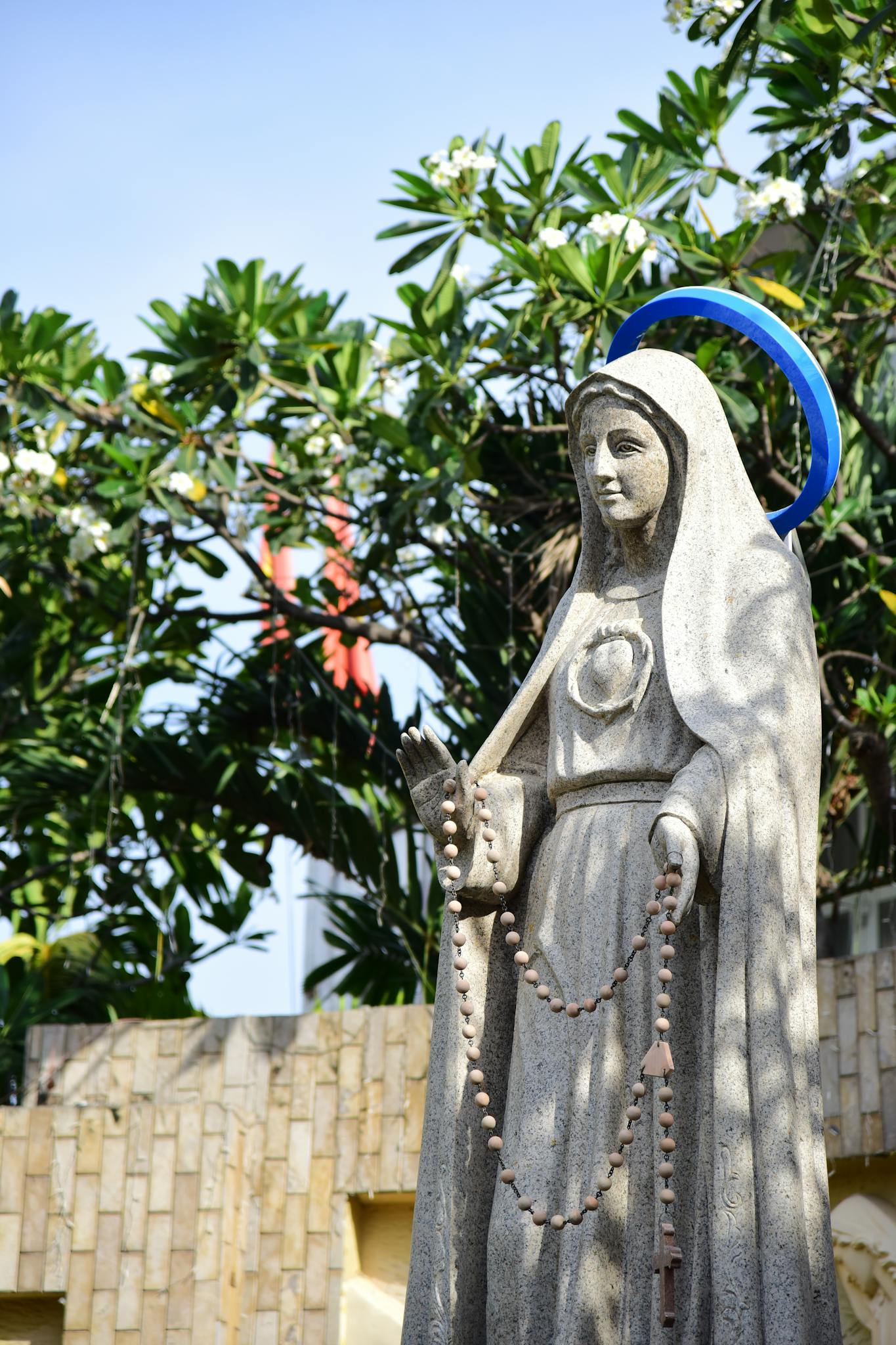
Our Lady of Coromoto
Marian Apparitions & Shrines
Venezuela’s patroness: a seventeenth-century tradition of Mary’s appearance to Cacique Coromoto, honored rather than investigated in the modern sense.
Our Lady of Coromoto is a centuries-old Venezuelan tradition holding that the Virgin Mary appeared to Cacique Coromoto, a leader of the indigenous Cospes people, near Guanare in 1651 and again in 1652, leaving behind a small image of herself now venerated as the nation’s patronal treasure. Unlike the twentieth-century apparition cases the Church has formally investigated, Coromoto is a long-received popular tradition rather than a case examined through the modern process of episcopal inquiry. Venezuela’s bishops declared her the country’s patroness in 1942, a designation Pope Pius XII ratified in 1944 and marked with a canonical coronation in 1952, and the shrine at Guanare was elevated to a minor basilica in 2007.
What Is the Devotion to Our Lady of Coromoto?
Our Lady of Coromoto is the patroness of Venezuela and the center of one of the oldest continuously venerated Marian traditions in Latin America. According to a tradition reaching back to the mid-seventeenth century, the Virgin Mary appeared to Cacique Coromoto, a chief of the indigenous Cospes people, near the Guanare region of what is now Venezuela, urging him toward baptism and, in a second appearance, leaving behind a small image of herself when he tried to seize hold of her. That small image is the very object venerated today at the shrine in Guanare, now a minor basilica and the spiritual heart of Venezuelan Catholic identity. It is important to understand Coromoto as a devotion of a different kind than many of the other Marian apparitions covered on this site: rather than a case examined by a modern episcopal commission using the investigative methods developed for nineteenth and twentieth-century apparitions, Coromoto is a centuries-old inherited tradition of the Venezuelan Church, received, honored, and formally confirmed through papal acts of a different sort – patronage, ratification, and coronation – rather than through the kind of diocesan worthy of belief inquiry used for cases like Lourdes, Fatima, Beauraing, or Banneux.
The Tradition of Cacique Coromoto
The tradition holds that the Virgin Mary first appeared to Cacique Coromoto in 1651, near a river in the Guanare region, urging him to seek baptism and instructing him to go to the local Spanish settlers for that purpose. According to the accounts handed down within Venezuelan Catholic tradition, Coromoto resisted this first appeal. The Virgin is said to have appeared to him a second time, on September 8, 1652, in his own hut. When Coromoto reached out to seize hold of the figure before him, she vanished, and in her place he found a small image or painting of herself left behind. That small image – not a statue, but a miniature picture only a few centimeters across – is the same object venerated today as Our Lady of Coromoto, preserved and displayed at the basilica built on the site associated with the tradition near Guanare.
Because this tradition originates in the seventeenth century, well before the era of formal, documented episcopal investigations that later became standard practice for cases such as Lourdes or Fatima, it does not carry the kind of dated commission reports, named investigating bishops, or decree of worthy of belief that mark those later cases. Instead, Coromoto has come down to the Venezuelan Church as an inherited popular tradition, sustained across centuries by continuous local devotion and eventually confirmed at the highest level of the universal Church through a different set of formal acts: papal ratification of Mary’s patronage over the nation, and the solemn canonical coronation of the image itself.
How the Church Has Honored Coromoto
Because Coromoto is a tradition rather than a modern investigated apparition, the Church’s formal engagement with it has taken a different shape than the diocesan worthy of belief process used for Beauraing or Banneux. Rather than an episcopal commission weighing eyewitness testimony from living visionaries, the relevant acts here are a series of papal and episcopal decisions that confirmed and elevated an already long-standing popular devotion.
- May 1, 1942 – the bishops of Venezuela formally declared Our Lady of Coromoto the Patroness of Venezuela.
- October 7, 1944 – Pope Pius XII ratified this declaration of patronage, giving it standing at the level of the universal Church.
- September 11, 1952 – on Pope Pius XII’s authority, the small image of Our Lady of Coromoto was canonically crowned in a ceremony performed by his legate, Cardinal Manuel Arteaga y Betancourt, an act of great solemnity in Catholic tradition reserved for images held in particularly high and enduring veneration.
- 2007 – Pope Benedict XVI elevated the shrine church at Guanare to the rank of minor basilica, now known as the Basilica of the National Shrine of Our Lady of Coromoto.
This sequence of papal acts – patronage, ratification, coronation, and eventually the elevation of the shrine itself – reflects a different but equally serious form of Church engagement with a Marian devotion. As with every devotion of this kind, however, the same underlying theological principle applies: whatever esteem the Church extends to Coromoto and the tradition surrounding her, nothing about it adds to the deposit of public revelation, which the Church holds to have closed with the death of the last Apostle. Devotion to Our Lady of Coromoto, like devotion to any Marian apparition tradition, remains a matter of pious and free assent rather than binding doctrine. Readers wanting the fuller distinction between the Church’s public, binding teaching and devotions of this kind should see public revelation versus private revelation.
The Spiritual Meaning of the Devotion
At the heart of the Coromoto tradition is the theme of invitation: Mary appearing to draw an indigenous leader toward baptism and incorporation into the Christian faith, at the very beginning of the evangelization of what is now Venezuela. The small image left behind when Coromoto reached to grasp the vision has long been read within Venezuelan piety as a sign of Mary’s abiding, if intangible, presence with the nation and its people – visible, tangible, and permanently left behind, even though the apparition itself could not be seized or possessed. For Venezuelan Catholics, devotion to Our Lady of Coromoto is inseparable from national and cultural identity in a way that few other Marian devotions are for their home countries; she is not simply one apparition among many but the patroness under whose protection the nation as a whole is formally placed.
The devotion is expressed through the ordinary channels of Catholic Marian piety – prayer, pilgrimage, and the rosary – directed toward Mary under this specific title and image, understood always as one expression of devotion to the same Blessed Virgin Mary honored throughout the universal Church under her many titles and appearances.
The Shrine Today
The Basilica of the National Shrine of Our Lady of Coromoto in Guanare is among the most important pilgrimage destinations in Venezuela, drawing pilgrims from across the country and the wider region, particularly around her feast day on September 11, the anniversary of the 1952 canonical coronation of her image. The small image itself remains the focal point of veneration at the shrine, housed within the basilica that Pope Benedict XVI elevated to that status in 2007. Pilgrimage to Guanare is often undertaken as an expression of national as well as personal devotion, and the feast day is marked with particular solemnity throughout Venezuela, including processions, special Masses, and large gatherings of the faithful at the national shrine.
For many Venezuelan Catholics, a pilgrimage to Guanare functions as both a personal act of devotion and a shared expression of national identity, in a way that sets Coromoto apart from apparition shrines tied more narrowly to a single local community. Families often travel considerable distances to venerate the small image in person, particularly around the September feast day, and the basilica welcomes organized diocesan and parish pilgrimages throughout the year, alongside individual visitors drawn by the long-standing tradition surrounding Cacique Coromoto. As with pilgrimage to any Marian shrine, the practice is understood within the Church as an expression of devotion offered freely, in honor of the Mother of God, rather than as an obligation binding on the faithful conscience.
Related Devotions
- Public Revelation vs. Private Revelation – the Church’s framework for understanding what devotion to an approved apparition or tradition does, and does not, require of the faithful.
- Marian Pilgrimages – an overview of pilgrimage practice at shrines associated with the Blessed Virgin Mary worldwide.
- Catholic Pilgrimages – a broader look at pilgrimage as a form of Catholic devotional practice.
- Our Lady of Lourdes – a contrasting case: a nineteenth-century apparition examined through the Church’s modern investigative process.