
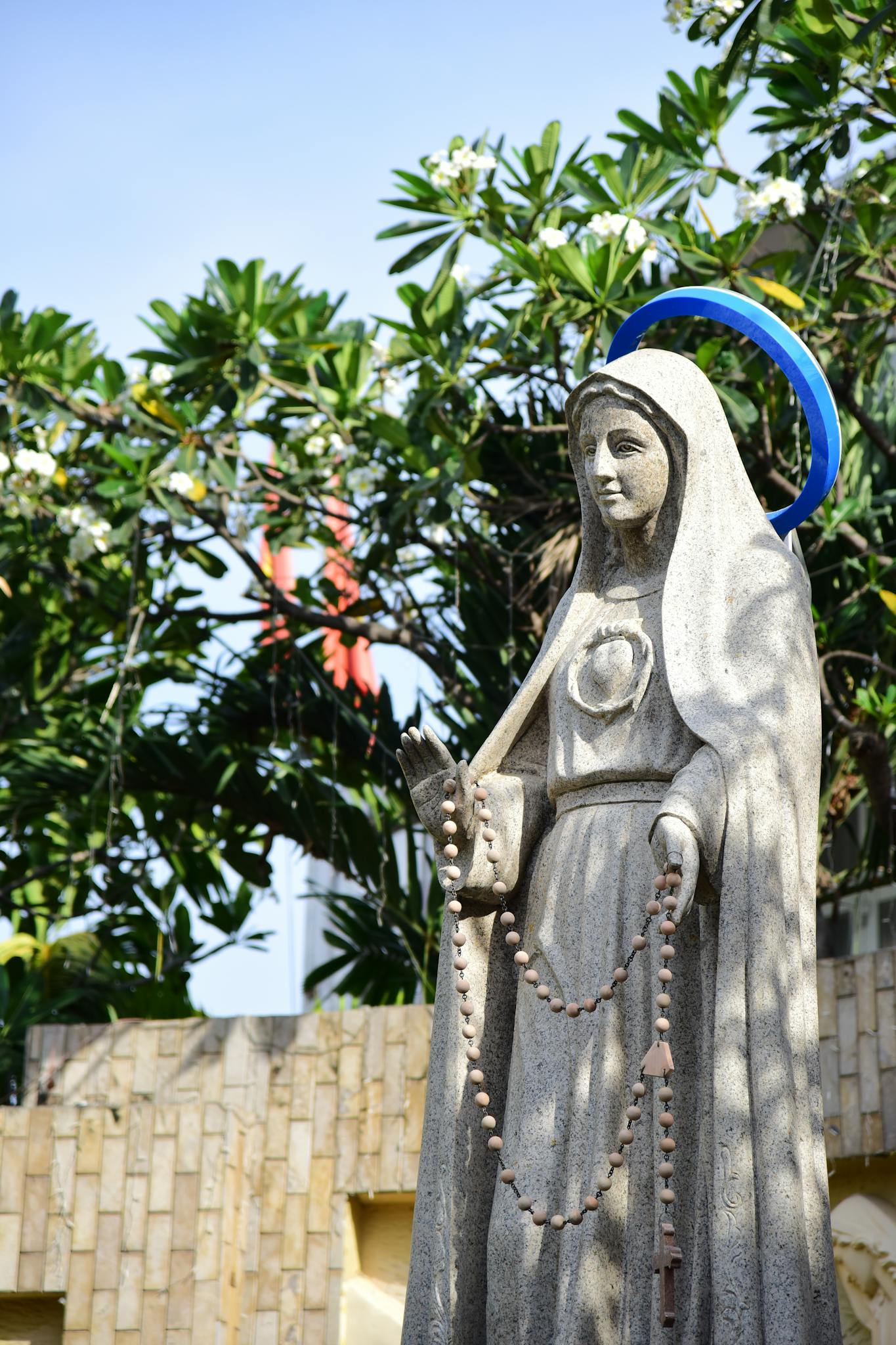
Our Lady of Chiquinquirá
Devotions
A ruined sixteenth-century painting reported to have visibly renewed itself before a laywoman at prayer, now venerated as Colombia’s patroness.
Our Lady of Chiquinquirá, also known as Our Lady of the Rosary of Chiquinquirá, is a Marian devotion centered on a painting made in 1560 by the artist Alonso de Narváez, which had deteriorated badly by 1586 when it was reportedly seen to renew itself in color and form before a laywoman, María Ramos, praying in a small chapel in Chiquinquirá, Colombia. The image received a canonical coronation in 1919, and it remains one of the most venerated Marian devotions in Colombia, closely tied to the town that grew up around its shrine.
Quick Facts
- Category: Marian Apparitions and Shrines — Major International Devotions
- Origin: A painting made in 1560 by Alonso de Narváez in Tunja, present-day Colombia, reported to have visibly renewed before María Ramos in 1586 at Chiquinquirá
- Feast: July 9 (Colombia; anniversary of the 1919 canonical coronation)
- Church status: An ecclesially recognized national shrine and devotion; the image received a canonical coronation authorized by Pope Pius X and carried out in 1919
- Private revelation: Not necessary to the devotion as a matter of faith; the reported 1586 renewal is long-received shrine tradition rather than a formally investigated apparition with a spoken message
What Is This Devotion?
Devotion to Our Lady of Chiquinquirá centers on a large painting of Mary, flanked by St. Anthony of Padua and St. Andrew, venerated at a shrine in the town of Chiquinquirá north of Bogotá, Colombia. What sets this devotion apart from most image-centered Marian titles is the specific claim at its heart: not that the painting simply survived across the centuries, but that a badly deteriorated canvas was reported to have visibly restored itself before a witness at prayer, an event that transformed a nearly ruined painting into Colombia’s most beloved Marian image.
Origin and History
The original painting was made in 1560 in Tunja by the Spanish artist Alonso de Narváez, commissioned by the encomendero Antonio de Santana, on a canvas of cotton woven by indigenous artisans and finished with pigments drawn from local minerals and plants. Housed afterward in a small, poorly built chapel exposed to damp and weather, the canvas deteriorated badly over the following decades, its images fading and the fabric itself torn and holed, until it was eventually taken down and left in storage as unfit for veneration. According to the tradition recorded at the shrine, on December 26, 1586, a devout laywoman named María Ramos, who had continued praying before the ruined canvas, witnessed it begin to glow and its torn, faded surface gradually restore itself, its colors and figures reappearing while some of the original damage remained faintly visible beneath the renewed paint — the event was first noticed and reported by an indigenous woman, Isabel, and a child, Miguel, who alerted María Ramos as it began.
News of the reported renewal spread quickly through the region, and a shrine grew up around the restored image at Chiquinquirá, which the Dominican order took responsibility for and which became closely associated with devotion to the Rosary. After a lengthy delay caused by unsettled political conditions in Colombia, a canonical coronation authorized by Pope Pius X in 1910 was finally carried out on July 9, 1919, in Bogotá’s Plaza de Bolívar, a date since kept as the image’s principal feast. Pope Pius XI raised the shrine to the status of minor basilica in 1927, and in 1977 Pope Paul VI established Chiquinquirá as its own diocese, with the shrine as its cathedral. Devotion to Our Lady of Chiquinquirá remains deeply woven into Colombian national identity, and the image is honored as one of the country’s principal Marian patronesses.
Catholic Theology
The devotion’s theological center is the reported renewal itself, understood not as proof of the painting’s own power but as a providential sign meant to draw prayer toward Mary’s intercession at a moment when a damaged, nearly discarded image might otherwise have been lost. As with any image-centered devotion, the Church’s interest lies in whether the devotion it inspired coheres with sound doctrine and bears spiritual fruit — confidence in Mary’s continuing care, expressed through the Rosary and ordinary prayer — rather than in certifying the physical mechanics of the reported event itself.
How to Practice It
- Make a pilgrimage to the Basilica of Our Lady of the Rosary of Chiquinquirá in Colombia, if able.
- Pray the Rosary, the devotion most closely associated with this shrine since its earliest years under Dominican care.
- Mark July 9 with prayer, the anniversary of the 1919 canonical coronation and the image’s principal feast in Colombia.
- Learn the documented history of the 1560 painting and its 1586 restoration, receiving the reported renewal as long-standing shrine tradition.
Associated Prayers
When It’s Observed
July 9 is kept in Colombia as the feast of Our Lady of Chiquinquirá, marking the anniversary of the image’s 1919 canonical coronation; it is not on the General Roman Calendar for the universal Church, remaining a national and diocesan observance.
Church Status
Our Lady of Chiquinquirá holds well-documented official standing: a canonical coronation authorized by Pope Pius X and carried out in 1919, minor basilica status granted by Pope Pius XI in 1927, and its own diocese established around the shrine by Pope Paul VI in 1977. Colombia’s civil and ecclesial life has long honored the image among the country’s principal Marian patronesses, though readers should note that some popular accounts attach a specific papal decree and date to that national-patroness title that could not be verified here with confidence; what is solidly documented is the coronation, basilica and diocesan history above, and it is on that basis that the Church’s recognition rests.
Common Misconceptions
“The painting was destroyed and a new one substituted after 1586.”
The shrine’s own tradition holds the opposite: the same original canvas, painted by Alonso de Narváez in 1560, is venerated today. Rather than being replaced, the badly damaged painting is reported to have visibly renewed in place, with some of its original scars still faintly visible beneath the restored image — continuity, not replacement, is the claim at the heart of the devotion.
Frequently Asked Questions
Who witnessed the reported renewal of the image?
María Ramos, a devout laywoman who had continued praying before the deteriorated canvas, is named in the shrine’s own account as the principal witness, alerted to the event beginning by an indigenous woman, Isabel, and a child, Miguel, who saw it first.
Who painted the original image?
The Spanish artist Alonso de Narváez painted it in 1560 in Tunja, in what is now Colombia, at the commission of the local encomendero Antonio de Santana, using pigments drawn from local minerals and plants on canvas woven by indigenous artisans.
Why is Chiquinquirá associated with the Rosary?
The shrine came under the care of the Dominican order, whose members have long promoted devotion to the Rosary, and the full traditional title of the devotion, Our Lady of the Rosary of Chiquinquirá, reflects that enduring connection.
Sources
- Directory on Popular Piety and the Liturgy: Principles and Guidelines (2001)
- General Roman Calendar
- Santuario de la Virgen de Chiquinquirá — official history