Our Lady of Charity of El Cobre
Devotions
The small statue three men recovered from Cuba’s Bay of Nipe in 1612, venerated ever since as the island’s national patroness.
Our Lady of Charity of El Cobre is a Marian devotion centered on a small statue recovered from the waters off Cuba’s Bay of Nipe in 1612 by two native brothers and a young enslaved boy, and enshrined ever since near the copper-mining town of El Cobre. Pope Benedict XV declared her Patroness of Cuba in 1916, the image received a canonical coronation in 1936, and both Pope Benedict XVI in 2012 and Pope Francis in 2015 made pilgrimages to her shrine, which Pope Paul VI had raised to the rank of basilica in 1977.
Quick Facts
- Category: Marian Apparitions and Shrines — Major International Devotions
- Origin: A small statue recovered from the Bay of Nipe near El Cobre, Cuba, by two brothers and a young enslaved boy in 1612
- Feast: September 8 (Cuba; the Nativity of the Blessed Virgin Mary)
- Church status: An ecclesially recognized national shrine and devotion; Our Lady of Charity was declared Patroness of Cuba by Pope Benedict XV in 1916 and the image was canonically crowned in 1936
- Private revelation: Not necessary to the devotion as a matter of faith; the devotion rests on the statue’s recovery and centuries of devotional history rather than a reported apparition or spoken message
What Is This Devotion?
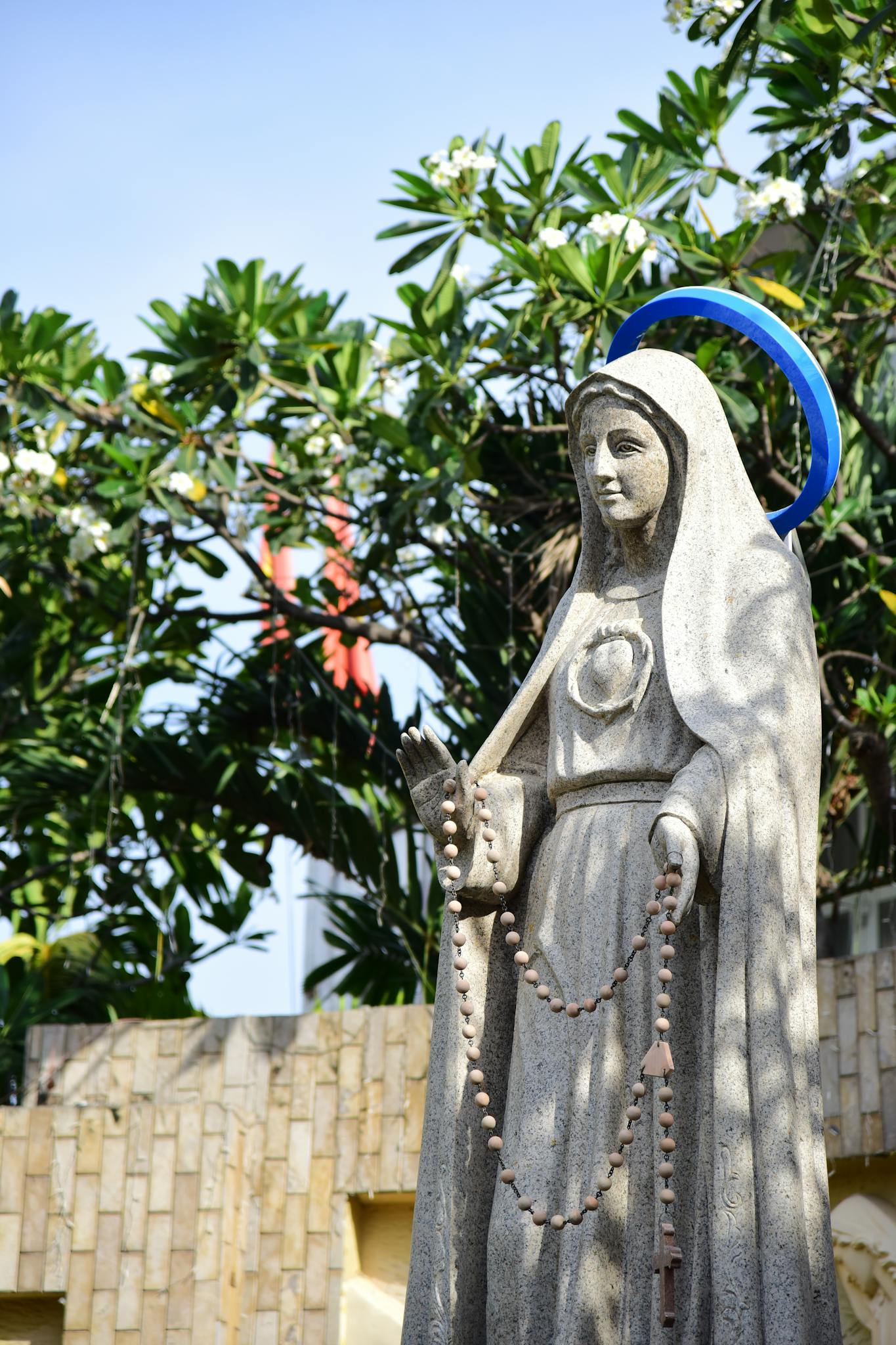
Devotion to Our Lady of Charity centers on a small wooden statue of Mary holding the Christ Child, dressed in golden robes, venerated at a shrine near the town of El Cobre in eastern Cuba. Known affectionately as “Cachita,” she is the most beloved and most universally recognized religious image in Cuban life, honored across the island and throughout the Cuban diaspora as the nation’s spiritual patroness regardless of a person’s particular church attendance or belief.
Origin and History
According to the shrine’s long-received account, in 1612 two native brothers, Rodrigo and Juan de Hoyos, together with a ten-year-old enslaved boy named Juan Moreno, were crossing the Bay of Nipe on the northeastern coast of Cuba to collect salt when they came upon a small statue of Mary floating on a board, remarkably dry despite the water around it, bearing an inscription identifying her as the Virgin of Charity. The three brought the statue ashore, and devotion grew quickly among the enslaved and free laborers of the nearby copper mines at El Cobre, for whom Mary under this title of charity held particular meaning. The Archdiocese of Santiago opened a formal inquiry into the growing reputation of the image as early as 1688, and devotion continued to spread through the following centuries even as Cuba passed through colonial rule, war and political upheaval.
In 1915, veterans of Cuba’s War of Independence petitioned Pope Benedict XV to name Our Lady of Charity patroness of the newly independent nation, and the pope did so by decree on May 10, 1916. The image received a canonical coronation in 1936 during a Eucharistic Congress held in Santiago de Cuba, and Pope Paul VI raised her sanctuary to the rank of minor basilica in 1977; Pope John Paul II crowned the image a second time in Santiago in January 1998, during the same visit in which he became the first pope to set foot in Cuba. Pope Benedict XVI made his own pilgrimage to the shrine on March 27, 2012, venerating the image and entrusting Cuba’s future to Mary’s intercession, and Pope Francis returned as a pilgrim on September 21 and 22, 2015, praying before the statue and celebrating Mass at the shrine during his own visit to the island.
Catholic Theology
The devotion’s core is simple and thoroughly orthodox: a small wooden statue has become, across four centuries, a focus for the prayer of an entire nation, not because the object itself holds power, but because generations of Cubans — enslaved laborers first among them — have turned to Mary’s intercession under this title in hardship, exile and hope. That the devotion took root first among Cuba’s poorest and most vulnerable communities, much as devotion to Our Lady of Aparecida did in Brazil, is often read as a fitting expression of Mary’s own scriptural closeness to the lowly.
How to Practice It
- Make a pilgrimage to the Shrine of Our Lady of Charity at El Cobre, Cuba, if able.
- Pray before an image of Our Lady of Charity, asking her intercession as patroness of Cuba and of the Cuban people wherever they live.
- Mark September 8 with prayer, the date kept nationally in Cuba and among Cuban Catholics abroad.
- Learn the documented history of the 1612 discovery and the devotion’s subsequent papal recognitions, distinguishing them from purely folkloric retellings.
Associated Prayers
When It’s Observed
September 8, the Nativity of the Blessed Virgin Mary, is kept in Cuba as the feast of Our Lady of Charity of El Cobre; it is not on the General Roman Calendar as a distinct universal observance, remaining a national and diocesan feast.
Church Status
Our Lady of Charity of El Cobre holds exceptionally strong official standing: formal declaration as Cuba’s national patroness by Pope Benedict XV in 1916, a canonical coronation in 1936 renewed by Pope John Paul II in 1998, minor basilica status granted by Pope Paul VI in 1977, and pilgrimages by both Pope Benedict XVI in 2012 and Pope Francis in 2015. The Church’s approval concerns the legitimacy and fruitfulness of devotion offered through this image; as with any devotion resting on a centuries-old recovery account rather than a formally investigated apparition, the 1612 story itself is received as long-standing shrine tradition rather than a claim requiring the Church’s doctrinal adjudication.
Common Misconceptions
“Mary appeared to the three men who found the statue.”
The traditional account describes the men finding an existing statue floating on the water, not witnessing an apparition or hearing a spoken message. The devotion’s origin is a providential discovery involving a sacred image, comparable in kind to Our Lady of Aparecida in Brazil, not an apparition requiring the kind of ecclesiastical discernment applied to reported visions and messages.
Frequently Asked Questions
Who found the statue of Our Lady of Charity?
Two native brothers, Rodrigo and Juan de Hoyos, and a ten-year-old enslaved boy, Juan Moreno, who together recovered the statue floating in the Bay of Nipe in 1612 while crossing the water to collect salt.
Why is Our Lady of Charity called “Cachita”?
Cachita is a Cuban term of affection widely used for the image, reflecting how deeply the devotion is woven into everyday Cuban life and identity, well beyond formal religious practice alone.
Have any popes visited the shrine at El Cobre?
Yes. Pope John Paul II crowned the image at Santiago de Cuba in January 1998, Pope Benedict XVI made a pilgrimage to the shrine itself on March 27, 2012, and Pope Francis prayed and celebrated Mass there on September 21 and 22, 2015.
Sources
- Directory on Popular Piety and the Liturgy: Principles and Guidelines (2001)
- Benedict XVI, Visit to the Shrine of the Virgen de la Caridad del Cobre (27 March 2012)
- Francis, Holy Mass at the Shrine of the Virgen de la Caridad del Cobre (22 September 2015)