
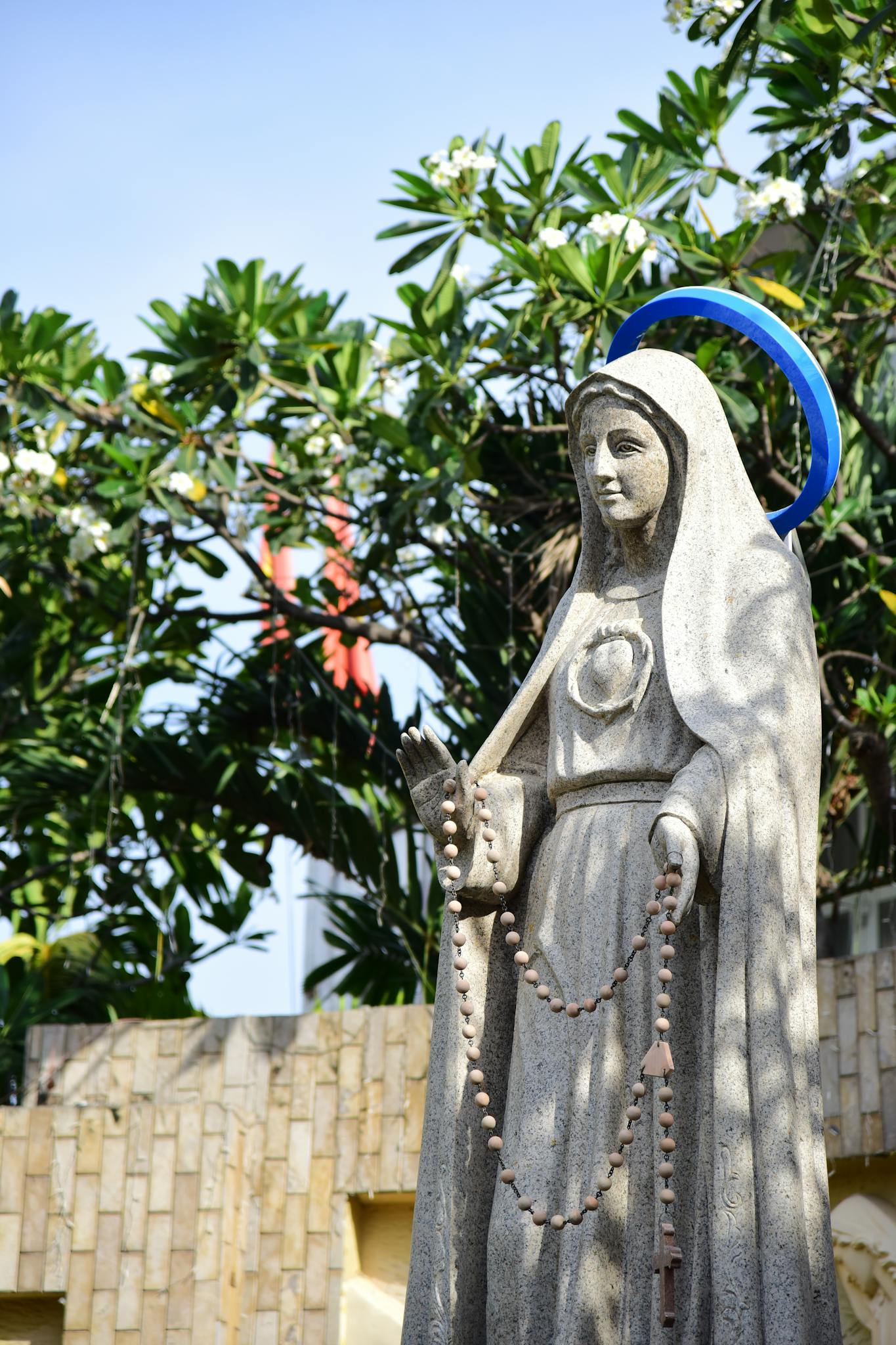
Our Lady of Banneux
Marian Apparitions & Shrines
The Virgin of the Poor: eight apparitions to Mariette Beco and the diocese of Liège’s definitive recognition of the message.
Our Lady of Banneux refers to eight reported apparitions of the Virgin Mary to eleven-year-old Mariette Beco in Banneux, Belgium, between January 15 and March 2, 1933. The Virgin reportedly identified herself as the Virgin of the Poor and asked for a chapel to be built. Bishop Louis-Joseph Kerkhofs of Liège gave initial approval in 1942 and, on August 22, 1949, issued definitive and unreserved recognition of all eight apparitions, a judgment reaffirmed by successive Bishops of Liège in the decades since.
What Is the Devotion to Our Lady of Banneux?
Our Lady of Banneux refers to a series of eight reported apparitions of the Virgin Mary to a single child, eleven-year-old Mariette Beco, in the small village of Banneux, near Liège in eastern Belgium, over about seven weeks in early 1933. According to Mariette’s account, the figure who appeared to her identified herself with a title that has since become inseparable from the devotion: the Virgin of the Poor. She asked that a chapel be built at the site and pointed the child toward a nearby spring, which pilgrims still visit today. The apparitions received the definitive and unreserved recognition of the diocese of Liège in 1949, and the shrine that grew up around the spring remains one of Belgium’s most visited Marian sites, drawing the sick, the poor, and pilgrims of every background who come seeking the comfort the Virgin of the Poor is said to have promised.
History of the Apparitions
Mariette Beco, the eldest of seven children in a poor family, reported the first apparition on January 15, 1933, when she saw a luminous lady in the garden behind her family’s house. Over the following weeks she reported seven further appearances, for a total of eight apparitions, occurring on the following dates.
- January 15, 1933 – the first apparition, seen by Mariette in the garden of her family’s home.
- January 18, 1933 – the second apparition.
- January 19, 1933 – the third apparition.
- January 20, 1933 – the fourth apparition, during which the figure reportedly led Mariette to a nearby spring.
- February 11, 1933 – the fifth apparition.
- February 15, 1933 – the sixth apparition.
- February 20, 1933 – the seventh apparition.
- March 2, 1933 – the eighth and final apparition of the series.
Word of the events spread through the region even as they were still taking place, and Banneux’s proximity to Beauraing, where a separate and unrelated set of apparitions was unfolding that same winter, meant that Belgian Church authorities found themselves examining two significant apparition claims at once, only a few weeks and a short distance apart. Because Mariette was so young, and because her family had little connection to organized religious life at the time, the local clergy and later the diocesan commission examined her account with particular care.
How the Church Recognized Banneux
As with Beauraing, the diocese responsible for Banneux, in this case the diocese of Liège, did not rush to a public verdict. Between 1935 and 1937, an episcopal commission examined Mariette’s testimony, the physical evidence at the site, and the character of the devotion that was already forming around the spring she had been shown. The process was deliberate and extended over several years before any formal statement was issued.
In May 1942, Bishop Louis-Joseph Kerkhofs of Liège gave his initial approval, permitting public veneration under the title Our Lady of the Poor. This early approval allowed the devotion to develop openly while the fuller canonical process continued. It is worth being precise about how this authority works: the definitive judgment on an alleged private revelation belongs to the local ordinary, here the Bishop of Liège, acting within his own diocese; the Holy See’s involvement in cases of this kind is generally to authorize or facilitate that diocesan process, not to issue a separate Vatican decree of its own. The final and unreserved word on Banneux came from Bishop Kerkhofs himself, not from a Vatican declaration.
On August 22, 1949, Bishop Kerkhofs issued the definitive, unreserved recognition of all eight apparitions of Banneux, formally declaring them worthy of belief. This judgment has not been an isolated or one-time statement left to gather dust; it has been explicitly reaffirmed by every succeeding Bishop of Liège. Bishop Guillaume-Marie van Zuylen restated the recognition in 1973, Bishop Albert Houssiau did so in both 1993 and 1999, and Bishop Aloys Jousten reaffirmed it again in 2008, each bishop restating in his own words that the apparitions and the message of the Virgin of the Poor remain worthy of faith. Pope John Paul II gave the shrine a mark of personal esteem when he visited Banneux on May 21, 1985, though this visit was a pastoral gesture and not itself a further act of canonical approval.
As with every case of this kind, the Church’s recognition of Banneux means that the apparitions and the devotion arising from them are judged consistent with Catholic faith and morals and safe for the faithful to embrace – it is not a dogmatic definition binding on anyone’s conscience, and it adds nothing to the deposit of public revelation, which the Church holds to have closed with the death of the last Apostle. Readers wanting the fuller theological distinction between this kind of ecclesial recognition and the Church’s definitive teaching should see public revelation versus private revelation. It is also worth noting that Banneux, like Beauraing, was investigated and formally settled under the older norms in force at the time, decades before the Dicastery for the Doctrine of the Faith’s 2024 norms on discerning alleged supernatural phenomena existed; those newer, more varied categories of verdict were never applied to this case.
The Message of the Virgin of the Poor
Mariette Beco’s account of the apparitions is notable for its simplicity and its focus on suffering, poverty, and prayer rather than on any elaborate prophecy. The figure reportedly identified herself directly, telling the child, I am the Virgin of the Poor. She is also reported to have said, I come to relieve suffering, and, in an exchange often quoted in devotional literature about Banneux, Believe in me and I will believe in you. She asked that a small chapel be built at the site, and during one of the early apparitions she led Mariette to a spring near the family’s garden, a spring that pilgrims still visit and draw water from today.
This message fits within a long-standing thread of Catholic Marian spirituality that emphasizes Mary’s closeness to the poor, the sick, and the suffering, echoing the Gospel’s own repeated attention to those on the margins. The title Virgin of the Poor situates the Banneux devotion alongside other expressions of Marian piety that stress her role as a comforting, intercessory presence for those in material or spiritual need, rather than as a source of new doctrine. For Catholics, devotion to Our Lady of Banneux is typically expressed through prayer for the sick and suffering, visits to the shrine’s spring, and the ordinary practices of Marian piety – the rosary chief among them – offered with the specific intentions the Virgin of the Poor is said to have encouraged.
The Shrine Today
The shrine at Banneux has grown from Mariette Beco’s family garden into an international pilgrimage site, with chapels, a basilica-style church, and facilities built specifically to welcome the sick and disabled, in keeping with the message of relief from suffering associated with the apparitions. The spring shown to Mariette during the fourth apparition remains a focal point for visiting pilgrims, many of whom collect water from it as part of their devotion. The shrine continues to host organized pilgrimages, both from Belgium and from abroad, along with regular Masses, processions, and opportunities for confession, and it remains under the ordinary pastoral oversight of the diocese of Liège.
Related Devotions
- Our Lady of Beauraing – a separate set of Belgian apparitions from the very same winter of 1932 to 1933, investigated by the neighboring diocese of Namur.
- Public Revelation vs. Private Revelation – the Church’s framework for understanding what an approved apparition does, and does not, mean for the faithful.
- Our Lady of Lourdes – the nineteenth-century apparitions at a spring in France that share Banneux’s emphasis on healing and the poor.
- Our Lady of Fatima – another twentieth-century apparition case, from 1917, that underwent a comparable process of Church discernment.
- Marian Pilgrimages – an overview of pilgrimage practice at shrines associated with the Blessed Virgin Mary.