
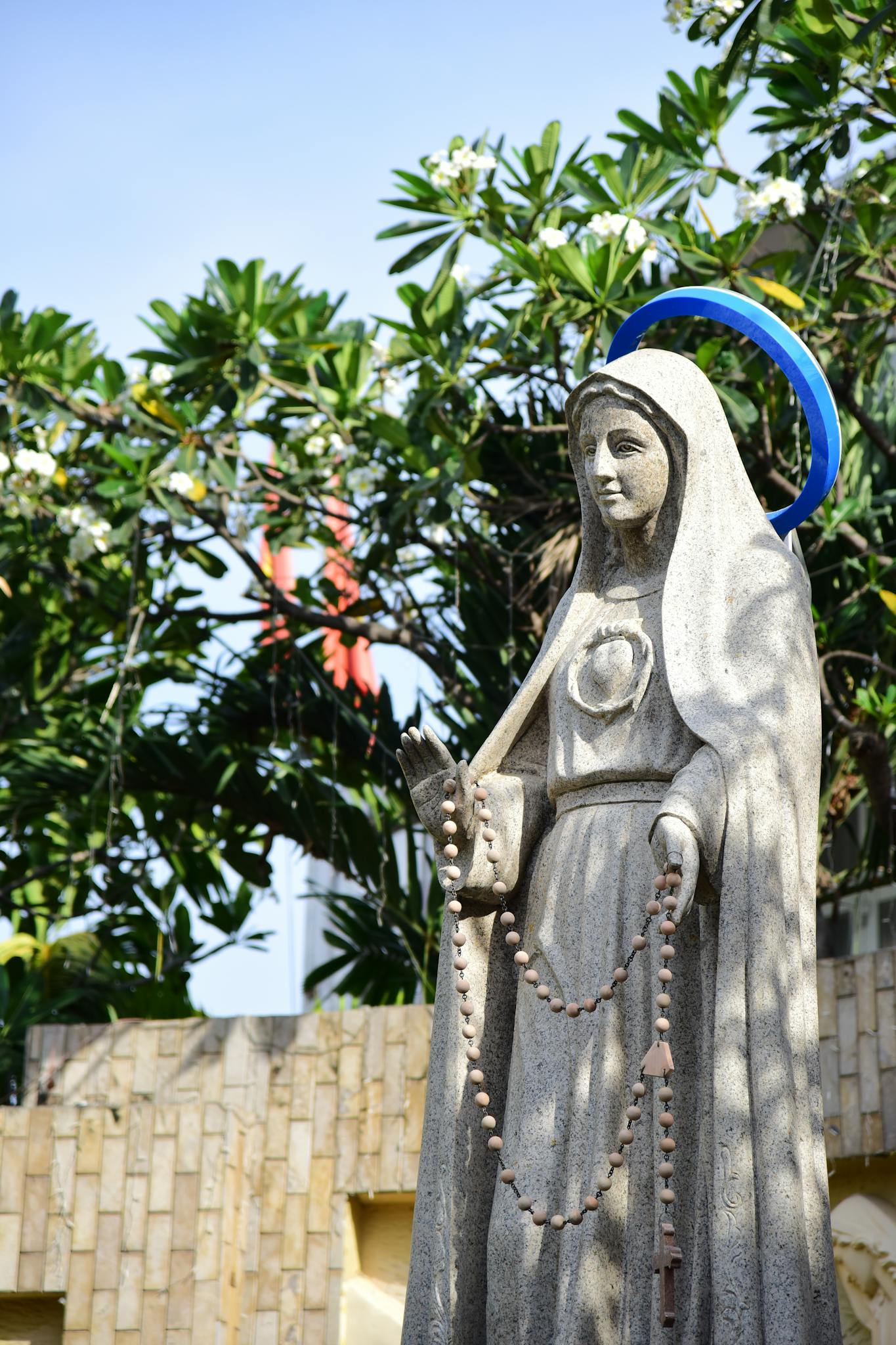
Devotion to St. Monica
Devotions
Devotion to the fourth-century North African mother of St. Augustine, honored for decades of persistent prayer and patience that preceded her son’s conversion.
Devotion to St. Monica honors a fourth-century Christian wife and mother from Roman North Africa, born around 331 in Tagaste, whose life is documented in unusual detail through her son St. Augustine’s own Confessions. She endured a difficult marriage to a pagan husband, Patricius, and prayed for decades for the conversion of her brilliant but wayward son, following him to Milan where both her prayers and Bishop Ambrose’s preaching contributed to his eventual baptism. She died in 387 at Ostia, on the journey home to Africa, and is honored today as patron of mothers, wives and those praying for the conversion of family members, with her feast on August 27.
Quick Facts
- Category: Saint-Associated Devotions — Named Saint Devotions
- Origin: The life of St. Monica (c. 331–387), documented especially in her son St. Augustine’s Confessions, written within a decade of her death
- Feast: August 27
- Church status: A permitted and established saint devotion; her sanctity is affirmed by the Church, and her story rests on unusually strong contemporary documentation for an ancient saint
- Private revelation: Not dependent on private revelation; devotion rests on her documented life and the Church’s own veneration rather than a reported apparition
What Is This Devotion?
Devotion to St. Monica means seeking her intercession especially for the conversion of family members, for troubled marriages, and for mothers enduring long years of prayer without visible results. She is commonly invoked by parents of children who have left the faith, by those in difficult marriages, and by anyone tempted to give up hope for someone else’s spiritual welfare, drawing on the example of a mother who, by her own son’s account, wept and prayed for him for roughly seventeen years before seeing his conversion.
Origin and History
Monica was born around 331 in Tagaste, in Roman North Africa (in present-day Algeria), to Christian parents, and was given in marriage to Patricius, a pagan town official known for a difficult temper, whom Augustine describes her enduring with patience and eventually helping to convert before his death. Her son Augustine, born in 354, showed early brilliance but drifted from Christian belief in his youth, embracing Manichaeism and living, in his own later account, a morally disordered life that caused his mother deep and prolonged grief.
Monica followed Augustine first to Rome and then to Milan, where he encountered the preaching of St. Ambrose, bishop of Milan, whose sermons Augustine credits as instrumental in his intellectual and spiritual turn toward Christianity. Augustine was baptized by Ambrose at Easter in 387; shortly afterward, as the family prepared to return to Africa, Monica fell ill and died at the port town of Ostia, in an episode Augustine records with unusual intimacy in Book Nine of the Confessions, including her request to be remembered wherever she was buried rather than returned to Africa for burial.
Catholic Theology
St. Monica’s devotion rests on ordinary Catholic teaching about the value of persistent, hope-filled prayer and the communion of saints, expressed through a real, well-documented life rather than through legend. Her story is often held up as a model of intercessory prayer that does not demand an immediate answer, and of patient endurance within a difficult marriage — virtues the Church commends generally, without treating her particular timeline or method as a formula that guarantees the same result for every family in a similar situation.
How to Practice It
- Pray a novena or daily prayer to St. Monica for the conversion of a family member or loved one.
- Read Book Nine of Augustine’s Confessions to encounter Monica’s life directly, in the words of the son who knew her best.
- Ask her intercession for patience and perseverance in a difficult marriage or family relationship.
- Join or support a St. Monica prayer group or ministry for parents praying for their children’s faith, common in many parishes.
Associated Prayers
When It’s Observed
St. Monica’s feast is kept on August 27, the day before her son’s own feast, St. Augustine, on August 28 — a pairing on the calendar that reflects how closely their two stories are joined in the Church’s memory.
Church Status
St. Monica has been venerated as a saint since the early centuries of the Church, and her feast is a settled part of the General Roman Calendar. Her documented life gives this devotion an unusually solid historical foundation among saints of her era, resting on Augustine’s own testimony rather than later legend.
Common Misconceptions
“St. Monica’s prayers guarantee that persistent prayer will convert any wayward family member.”
The Church does not teach this. Monica’s example commends persistent, hope-filled prayer as valuable in itself, trusting God’s timing rather than a fixed outcome or schedule. Augustine himself took decades to convert, and the Church holds up Monica’s patience and endurance as a model of faith and love, not a technique that guarantees a particular result within any set timeframe.
Frequently Asked Questions
How do we know so much about St. Monica’s life?
Her son St. Augustine wrote about her at length in his Confessions, composed within about a decade of her death in 387, making her one of the better-documented women of the early Church. This gives her devotion an unusually strong historical foundation compared with many saints of the same era, whose lives are known chiefly through later legend.
Why is St. Monica connected to prayers against alcoholism?
Some devotional literature notes an early struggle Augustine describes his mother having overcome in her youth, related to wine drawn from the household stores, which she stopped after being confronted about it by a servant. This episode, recounted briefly in the Confessions, is behind her sometimes being invoked in connection with victims of alcohol abuse and their families, alongside her better-known patronage of mothers and difficult marriages.
What does St. Monica’s death at Ostia mean for her devotion?
Augustine’s account of his mother’s final days and death at Ostia, on the journey home to Africa, is one of the most personal and theologically reflective passages in the Confessions. Her recorded wish to be remembered at the altar wherever she died, rather than insisting on burial in her homeland, has long resonated with Catholic teaching on prayer for the dead and trust in God’s providence over particular earthly arrangements.
Sources
- Directory on Popular Piety and the Liturgy: Principles and Guidelines (2001)
- General Roman Calendar
- St. Augustine, Confessions, Book Nine, for the primary account of St. Monica’s life and death