Chaplets
Devotions
What a “chaplet” is in Catholic prayer, how the form developed, and how it differs from the Rosary and from a novena.
A chaplet is a form of Catholic prayer that uses a fixed sequence of prayers, usually counted on a string of beads, to focus meditation on a mystery of the faith, an aspect of God’s mercy, or a particular saint. The Rosary is the most famous example, but it is one chaplet among many others devoted to the Sacred Heart, the Divine Mercy, the Seven Sorrows, and other subjects described throughout this site.
Quick Facts
- Category: Foundation & Doctrine — a reference page, not a devotion itself
- Applies to: Every chaplet devotion described on this site
- Key distinction: a chaplet is a prayer form; the Rosary, the Divine Mercy Chaplet, and others are specific chaplets built on that form
- Governing principle: chaplets are popular piety, not liturgy, and should lead back to Scripture and the sacraments
- Catechism reference: CCC §§1674–1676 on popular piety; CCC §2668 on repeated vocal prayer
What Is a Chaplet?
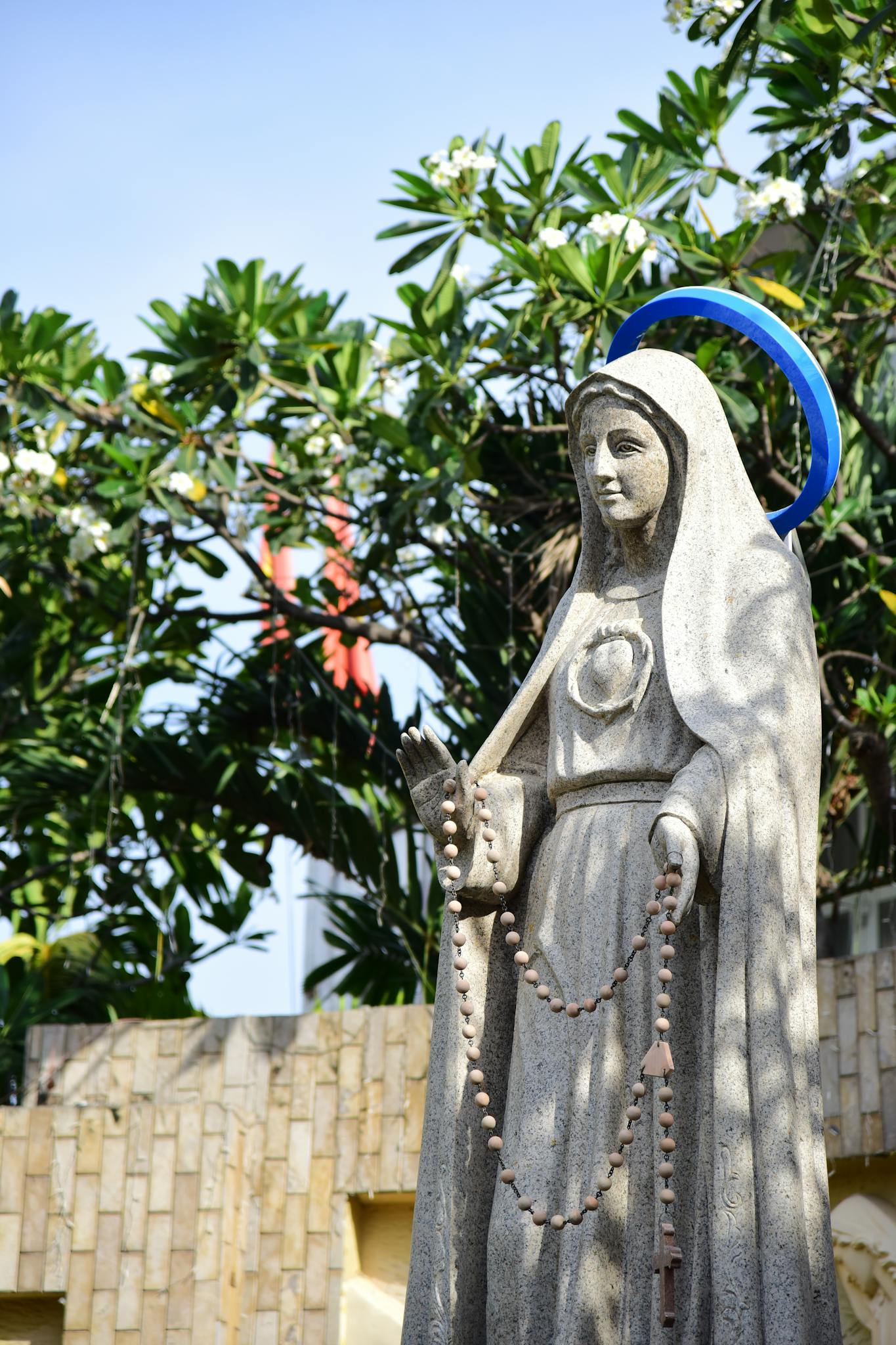
A chaplet is a sequence of prayers, typically prayed on a string of beads or a knotted cord, built around a particular mystery, virtue, or saint. The word comes from the French chapelet, a “little crown” or garland, because strings of prayer beads were sometimes fashioned like wreaths. “Chaplet” is the general term for this form of prayer; “the Rosary” refers to one specific, and by far the most widespread, chaplet — the one built around fifteen (traditionally) or twenty mysteries of Christ’s life prayed through Mary. Other chaplets, such as the Chaplet of Divine Mercy or the Chaplet of the Seven Sorrows, use their own bead counts and their own sequence of prayers around a different subject entirely.
Origin and History
The practice of counting repeated prayers goes back to the earliest Christian monks, who prayed short, repeated formulas — sometimes counted on knotted cords or piles of pebbles — as a way of sustaining continual prayer during manual labor. In the Latin West, lay Christians who could not read the Psalter began substituting repeated Our Fathers or Hail Marys for the monks’ recitation of all 150 psalms, giving rise to strings of 150 beads sometimes called a “poor man’s psalter,” the direct ancestor of the Rosary. From this common root, particular religious orders and individual saints developed their own chaplets tied to specific devotions over the centuries that followed — the Servite Order’s chaplet of Mary’s seven sorrows, the Franciscan Crown built around Mary’s seven joys, and, in the twentieth century, the Chaplet of Divine Mercy that St. Faustina Kowalska reported receiving in a private revelation. The form spread the way most popular piety does: organically, through many different communities, rather than by a single central design.
Catholic Theology
Repeated vocal prayer of this kind is not the “babbling” Christ warned against in Matthew 6:7; that warning concerns empty or showy repetition meant to impress rather than to pray. The Catechism notes that when a simple, repeated prayer is prayed by a humbly attentive heart, it is not lost by heaping up empty phrases (CCC §2668). A chaplet works by engaging the body — the physical rhythm of moving through the beads — together with the mind’s attention on a fixed mystery, which is precisely why the form has endured across so many different devotions and centuries.
How to Practice It
- Hold the chaplet and begin, typically with the Sign of the Cross and an opening prayer proper to that chaplet.
- Move through the beads in sequence, praying the assigned prayers for each group.
- Hold the chaplet’s proper mystery, virtue, or intention in mind rather than letting the repetition become automatic.
- Close with the chaplet’s proper closing prayer.
- Pray it as often as you like — daily, weekly, or on a specific day connected to its subject — since no fixed frequency is required unless a particular chaplet’s own tradition specifies one.
Church Status
“Chaplet” names a form, not one devotion, so its Church status has to be checked chaplet by chaplet. Some, like the Chaplet of Divine Mercy, have received strong, explicit papal encouragement; others are simply long-tolerated popular custom that has never required a formal act of approval. As with any pious exercise, a chaplet is legitimate to the extent that it supports rather than substitutes for the liturgy and the sacraments, and no chaplet — however old or widespread — carries the weight of an obligation the way Sunday Mass does.
Common Misconceptions
“A chaplet and the Rosary are simply the same thing under two names.”
The Rosary is the best-known chaplet, but “chaplet” is the broader category. Dozens of other chaplets exist, each with its own beads, prayers, and subject, quite distinct from the Rosary’s fifteen or twenty mysteries.
“Praying a chaplet mechanically guarantees a specific result.”
No sacramental or devotional object works automatically, apart from the faith of the person praying. A chaplet is an aid to prayer, not a formula that produces an effect regardless of one’s disposition.
Frequently Asked Questions
What is the difference between a chaplet and a novena?
A chaplet is a prayer form, usually prayed in one sitting with beads. A novena is a nine-day period of prayer, which may or may not use a chaplet as part of its daily prayers; the two describe different things — structure versus duration — and can be combined.
What is the difference between a chaplet and a litany?
A litany is a list of invocations, often titles of Christ, Mary, or a saint, each followed by a short response, typically prayed straight through rather than counted on beads. A chaplet may incorporate a litany-like list, but the two are distinct prayer forms.
Do I need special beads to pray a chaplet?
No. Many chaplets have their own traditional bead arrangement, but the prayers can be counted on the fingers or an ordinary set of beads if a chaplet-specific set is not available.
Is praying a chaplet the same as attending Mass?
No. A chaplet is a devotion, part of popular piety; the Mass is the Church’s central act of liturgical worship. Chaplets support a life centered on the Mass and the sacraments; they do not replace them.
Sources
- Directory on Popular Piety and the Liturgy: Principles and Guidelines (2001)
- Catechism of the Catholic Church, §§1667–1679